





|
1959 Gibson Les Paul Custom |
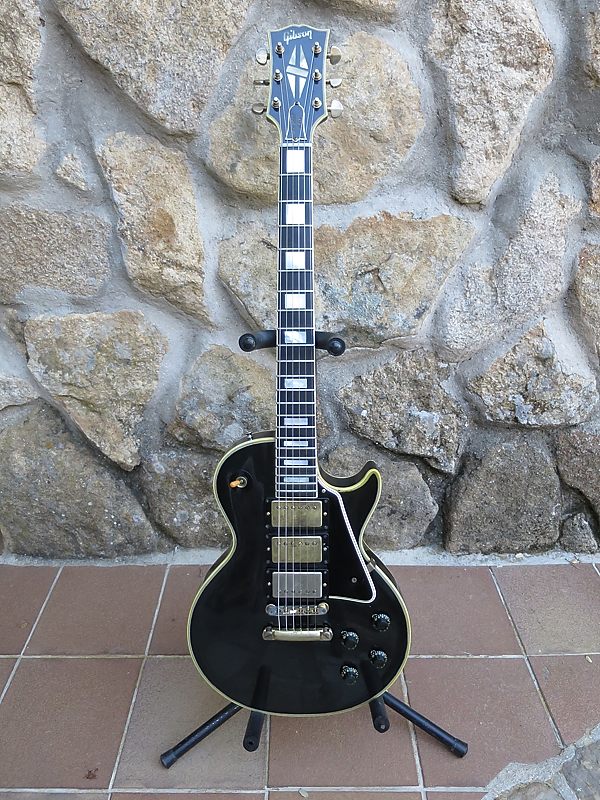
This time I'm showcasing a really extraordinary and special guitar. It is nothing less than an authentic Gibson Les Paul Custom from 1959. It is not a reissue, it is really from that mythical year for these guitars. In addition, it is a completely original example that, except for the lacquer as we will see later, has all the original components, which is rare for a guitar of this age.
As you may already know, this is not the first Gibson Les Paul from 1959 that we show here. This one's clearly of a higher level. In fact, it was the top of the Les Paul line for that year, although, for other reasons, the ones that are most valuable today are the "Burst" which, as we all know, were cheaper originally.
This guitar was acquired many years ago by Enrique Garcia (without the accent  ), a very well known, experienced and respected luthier from southern Spain. The guitar was in a very good condition and in working order although it was in desperate need of a restoration. This report documents that process in considerable detail, being an almost unique opportunity to see a guitar as remarkable as this completely naked.
As you can imagine, such a guitar deserves an extensive report with many, many photos. Enrique and I hope you like it.
These guitars were originally finished in nitrocellulose lacquer, which made the finish somewhat fragile if they were given a lot of use, so someone decided at some point to repaint it in polyurethane, which is a finish less noble and adequate but more durable. As you may see from the very worn bridge, this guitar has been used alot so the repaint job was surely out of necessity, not for pleasure.
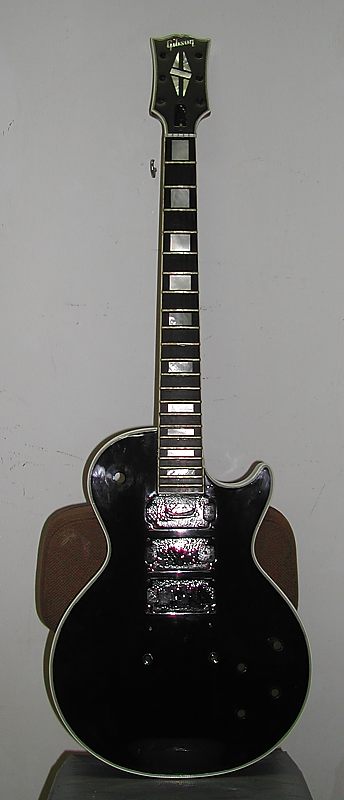
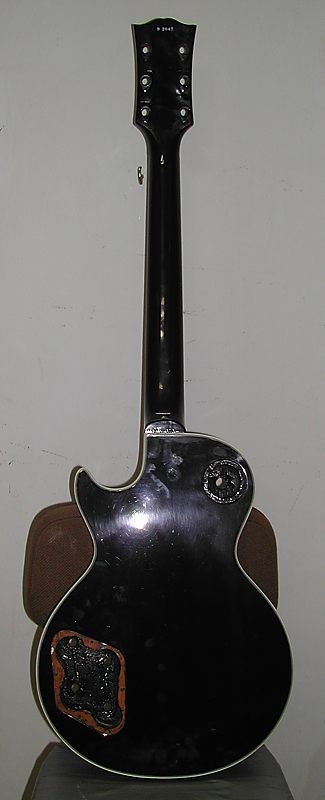
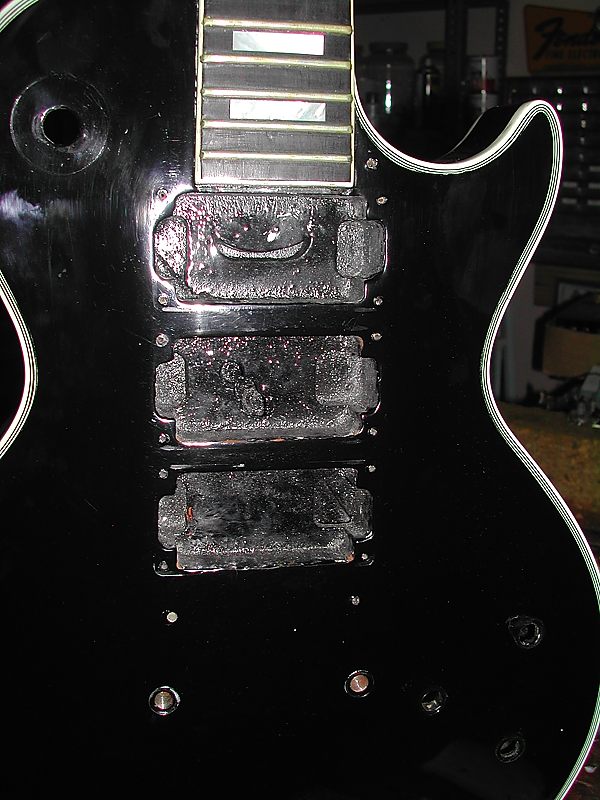
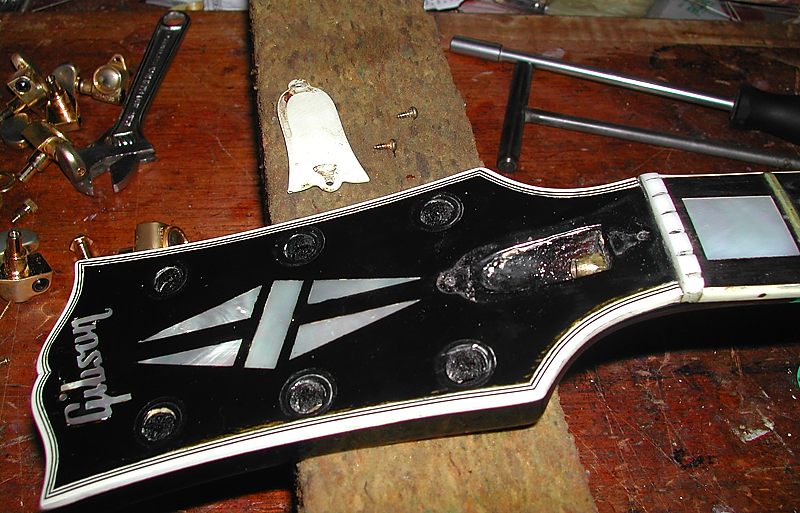
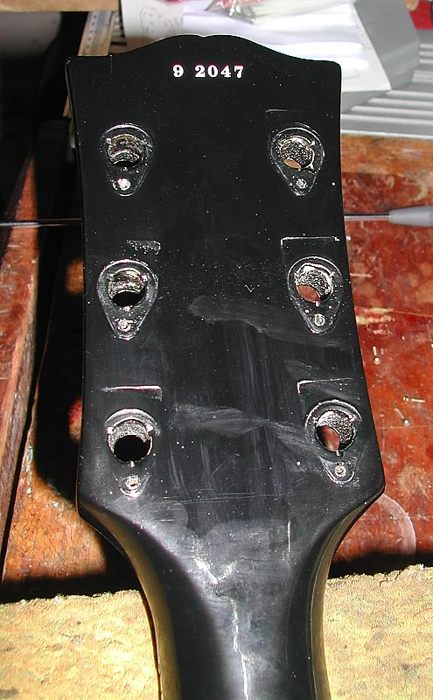
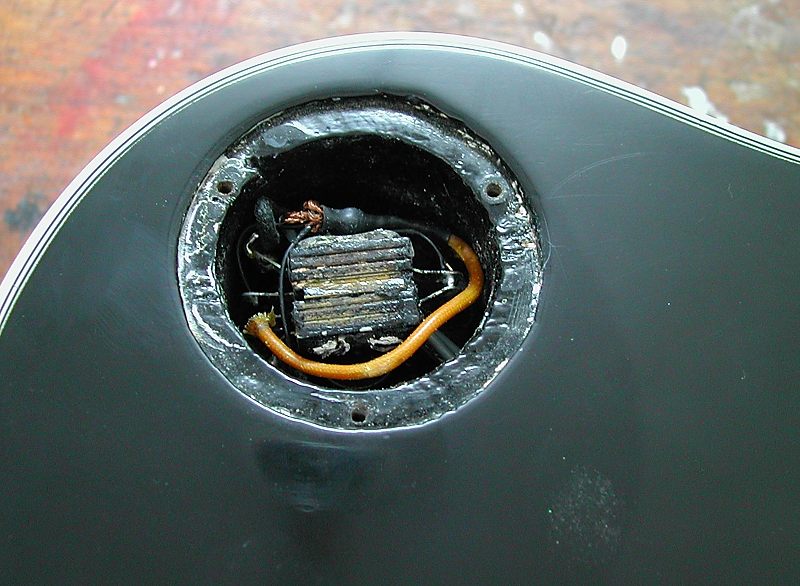
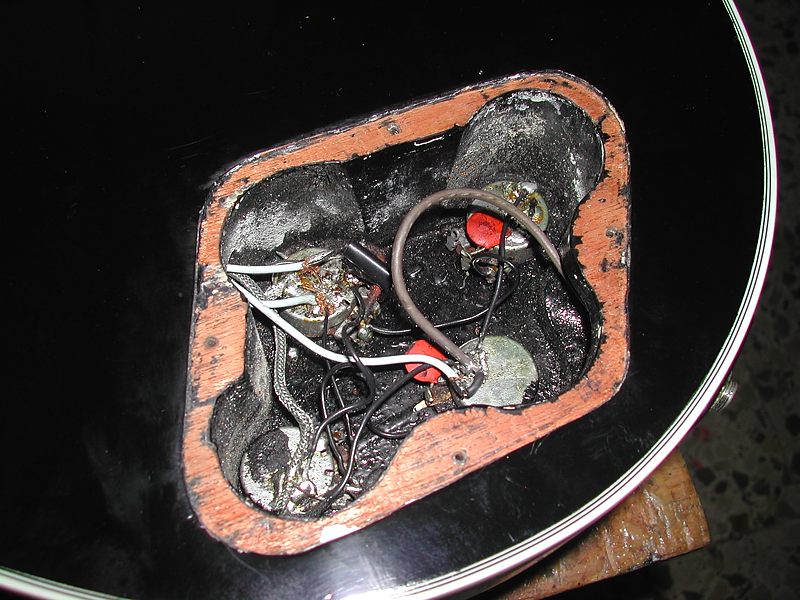
The polyurethane was later removed by hand by Enrique Garcia, a task in which he invested no less than five years, bit by bit, in order to maintain the original curves of the entire instrument. Chemical strippers were never used, which undoubtedly would have ruined the bindings. Just sandpaper and patience.
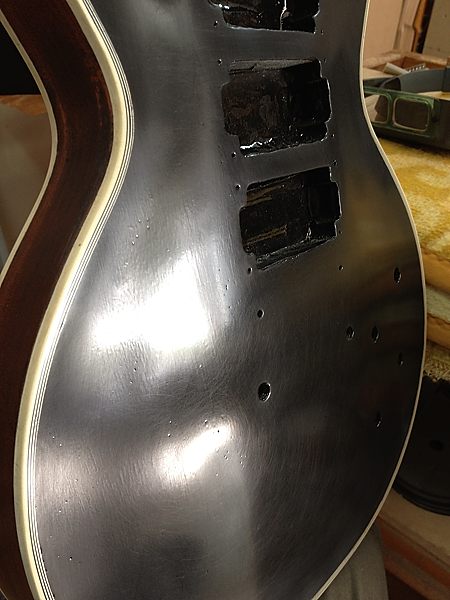
During the long sanding process it was possible to verify that the original nitrocellulose lacquer had completely disappeared in the previous sanding, when polyurethane coats were applied. Under the polyurethane there was only a thick gray grain filler. A bad move! There was no choice but getting rid of everything and let the new nitrocellulose coatings allow that noble wood, which was encased in polyurethane varnish, to vibrate and breathe again.
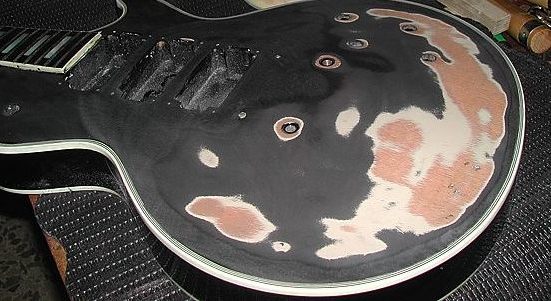
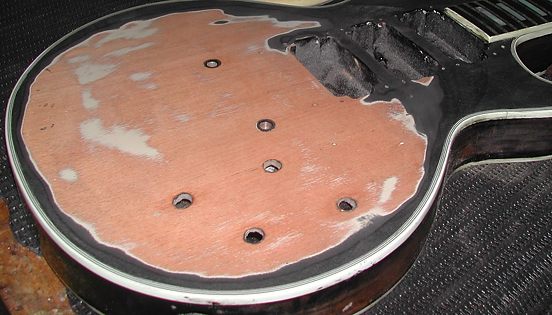
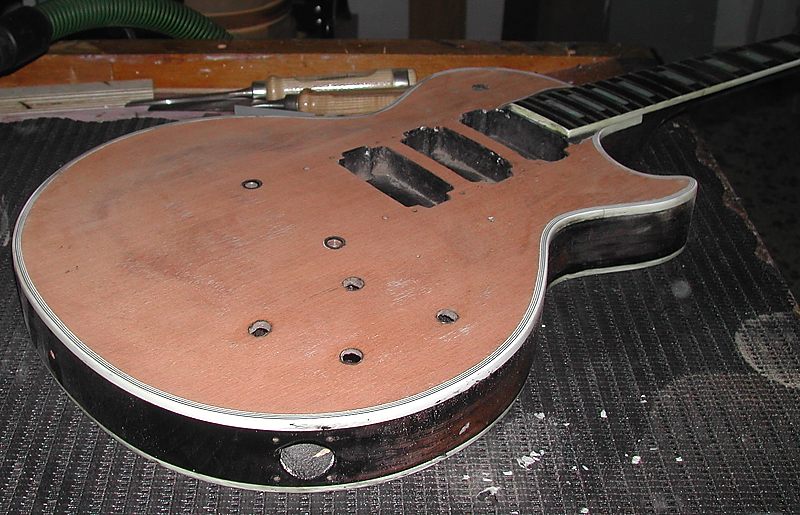
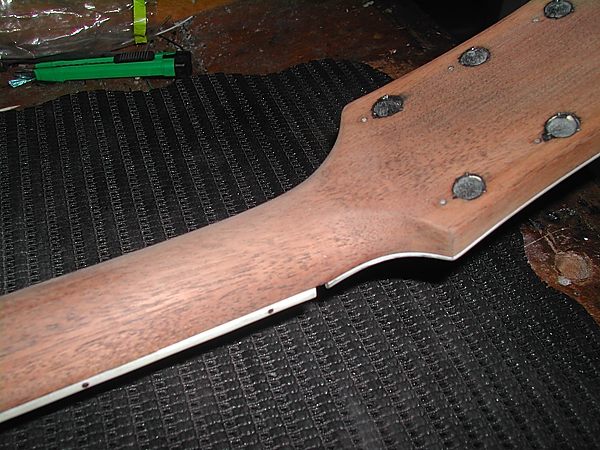
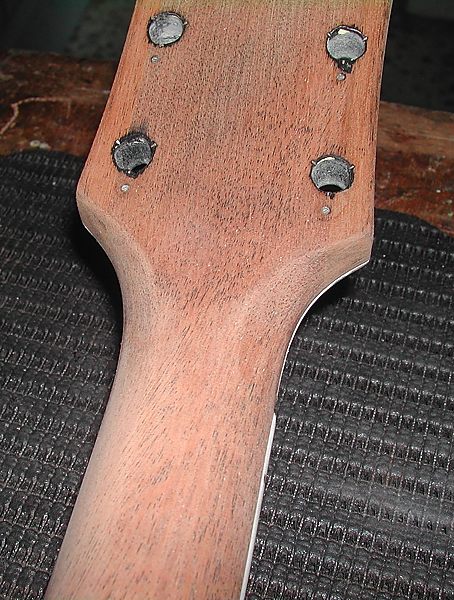
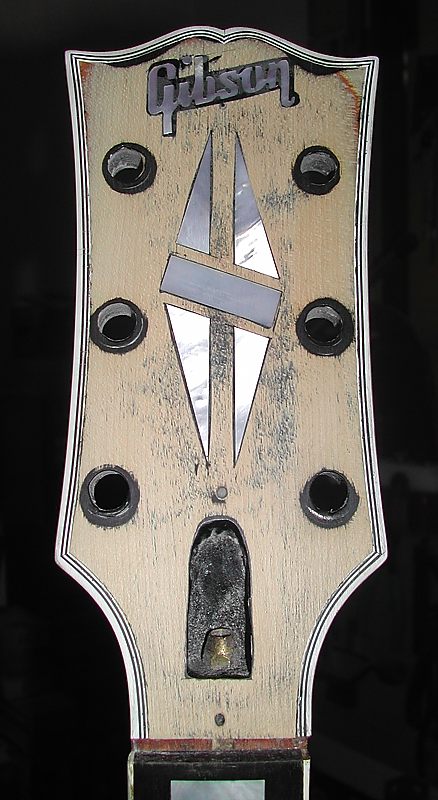
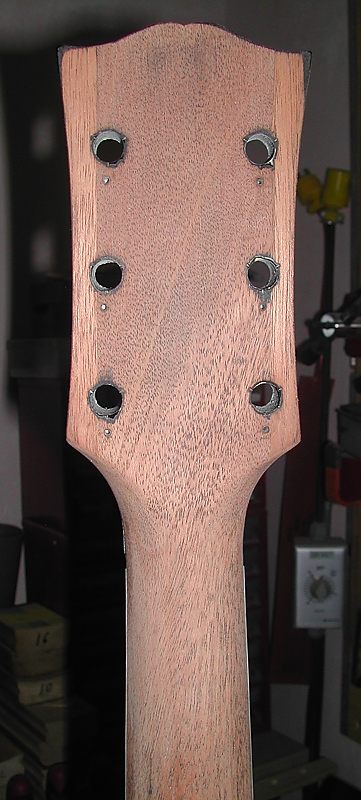
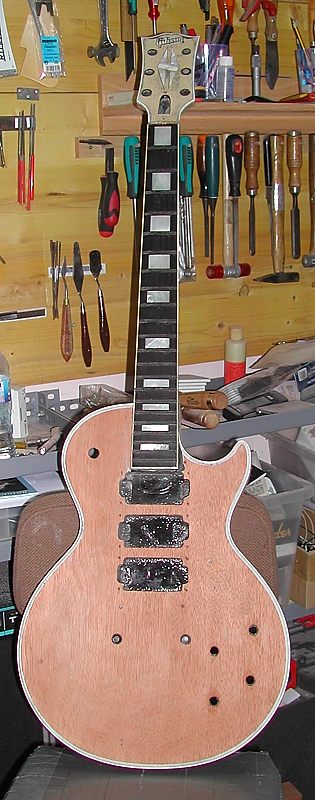
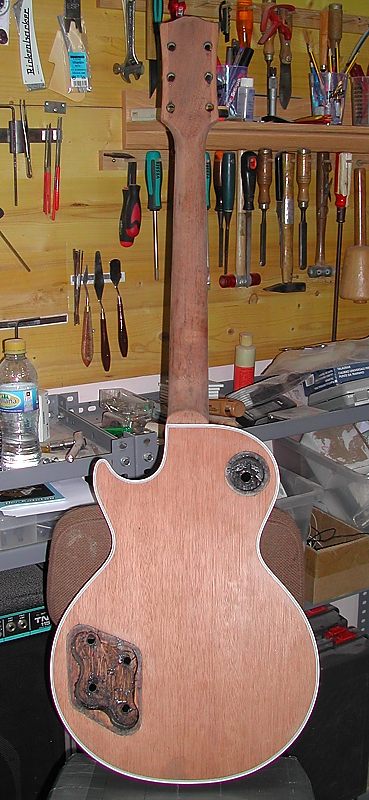
As you can clearly see in the previous and following photos, the guitar has not suffered from added holes, modifications or breaks.
When the guitar was left on the bare mahogany, Enrique even considered leaving it as is, so that it would be seen that it had no breaks or extra holes, i.e.: from Bigsby, different tuners, bridge, etc. Subsequently, and after requesting advice from members of the Les Paul Forum and MyLesPaul, most insisted that it should be lacquered in the original Black Beauty black nitrocellulose finish but, yes, documenting the process thoroughly.
Below are several images with the process of priming and painting the guitar in nitrocellulose lacquer:
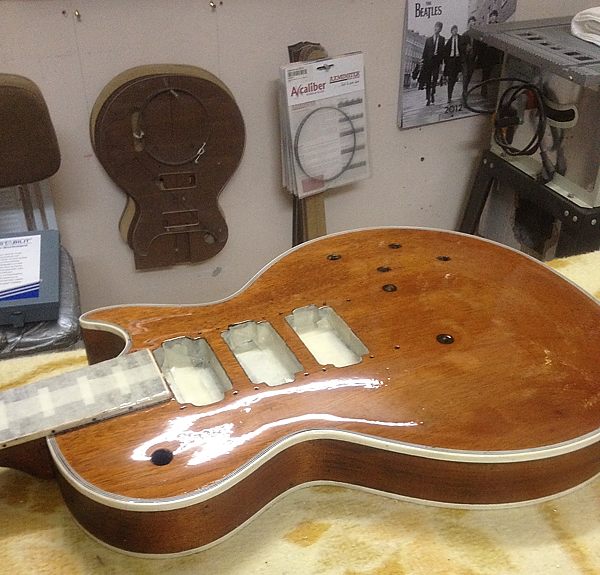
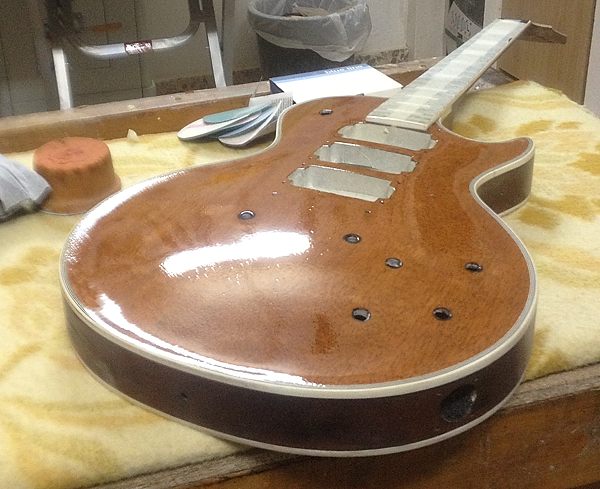
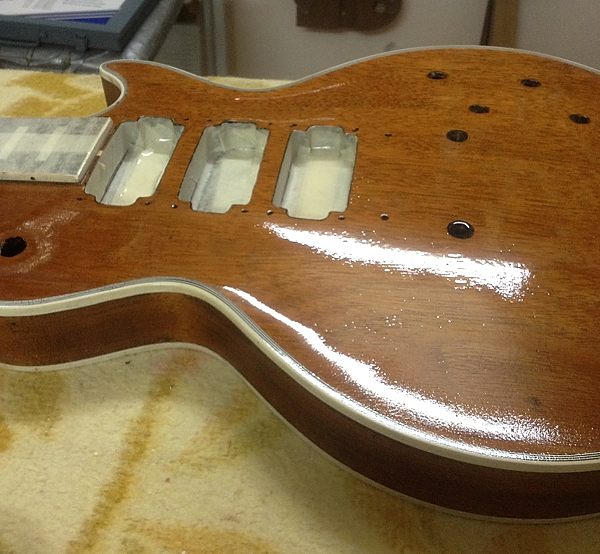
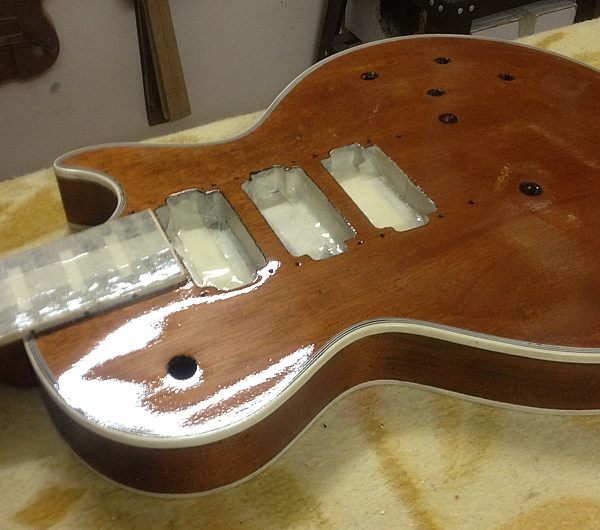
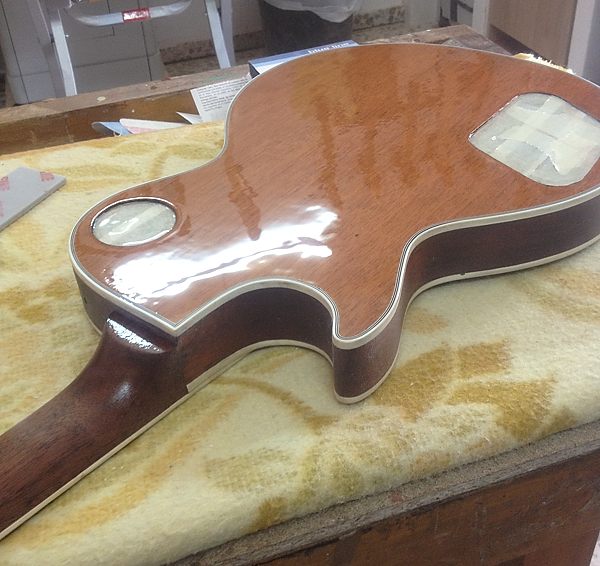
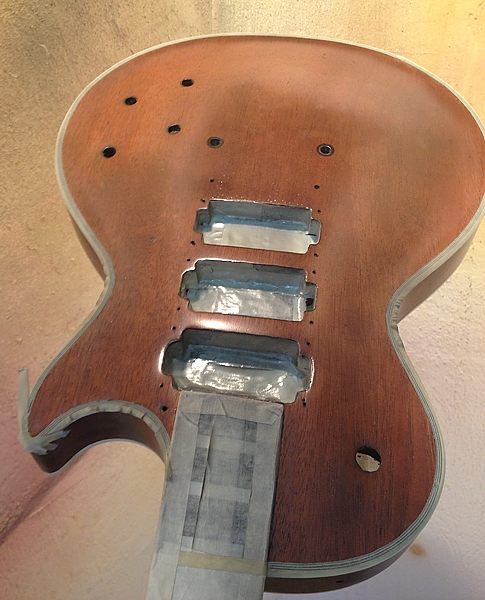
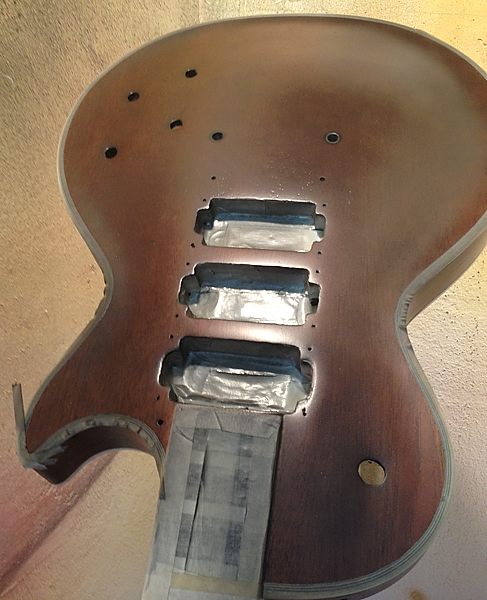
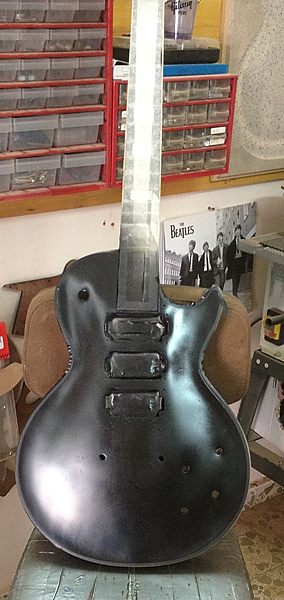
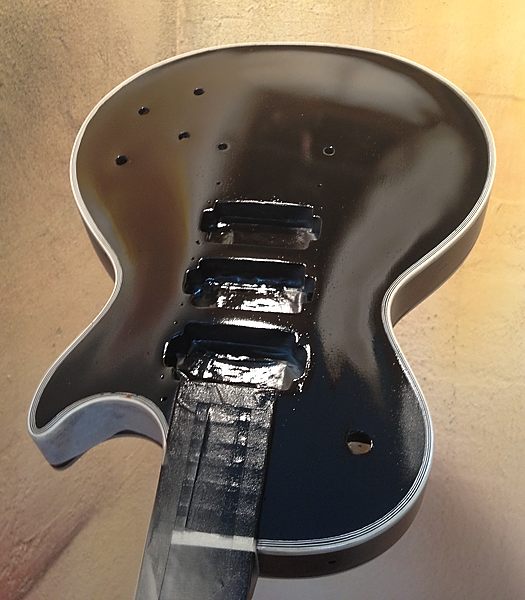
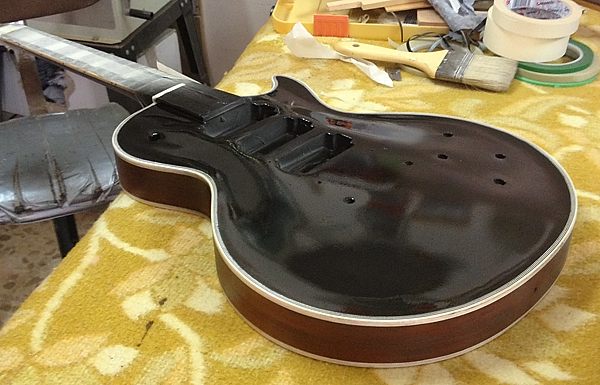
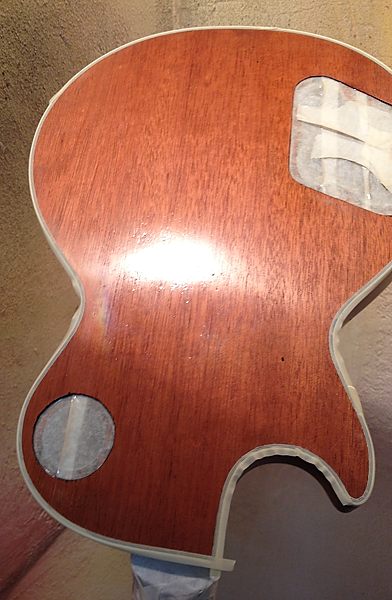
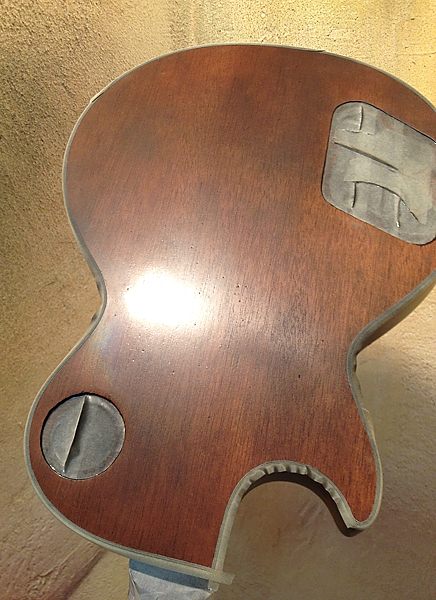
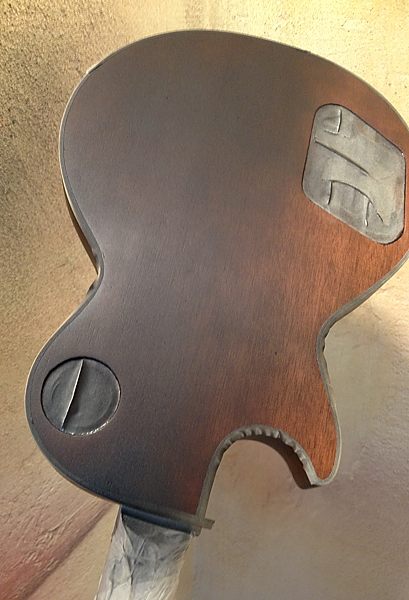
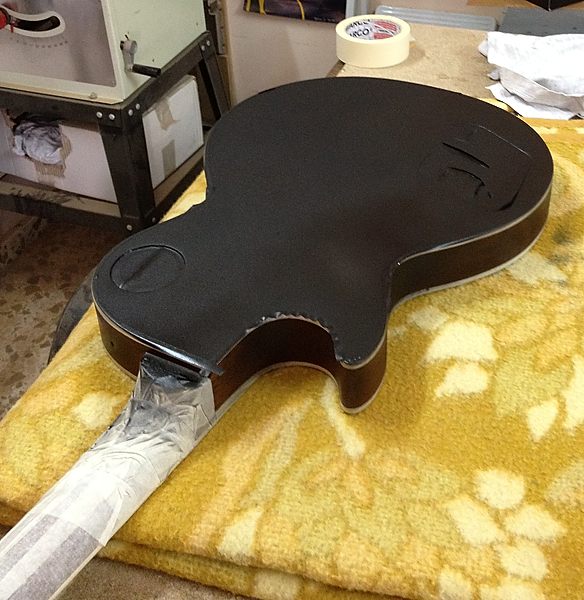
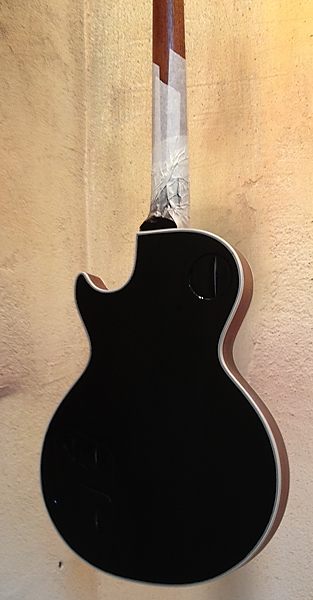
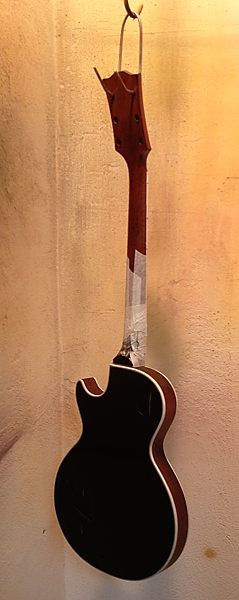
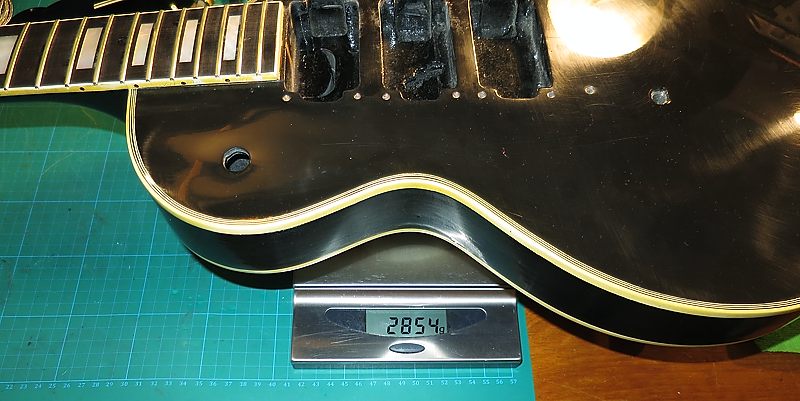
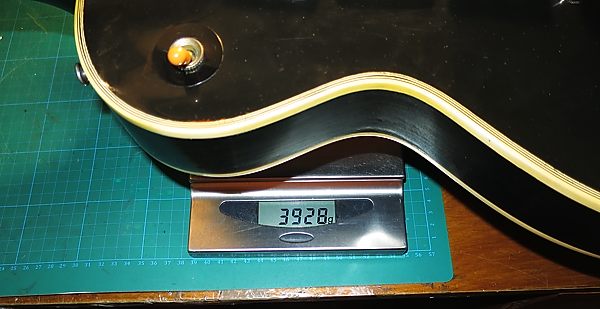
Once the guitar is completely lacquered again in black nitrocellulose, refretted and before putting any other hardware, take a look at the next photo. You can see the weight of the guitar as it was then, only wood and little more:
The body of this guitar is made of one-piece Honduran mahogany. It does not have a "top" as is usual with other Les Pauls and Customs, since the entire body is made out of a single block of wood, which is the typical construction of these guitars at that time. In the photos of the naked body it can be seen that there are no traces of holes other than the original ones.
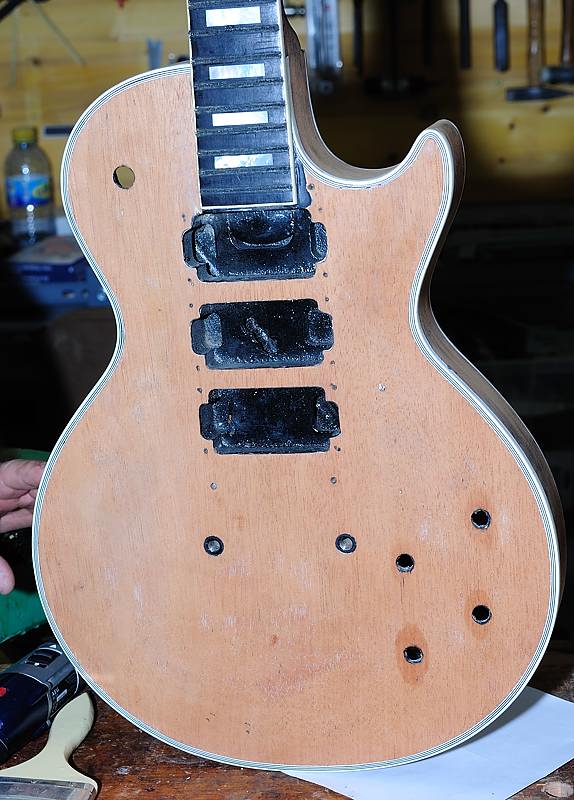
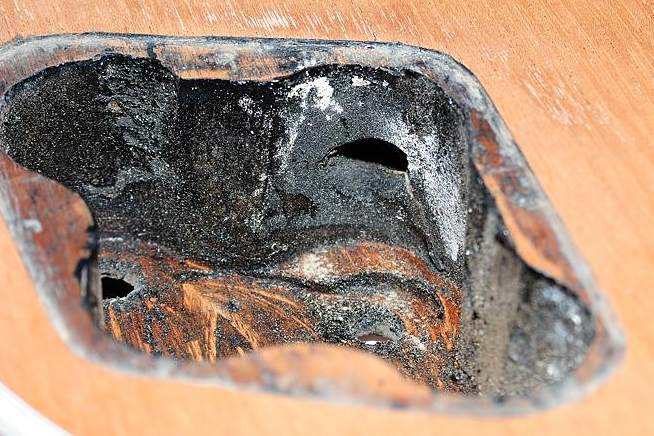
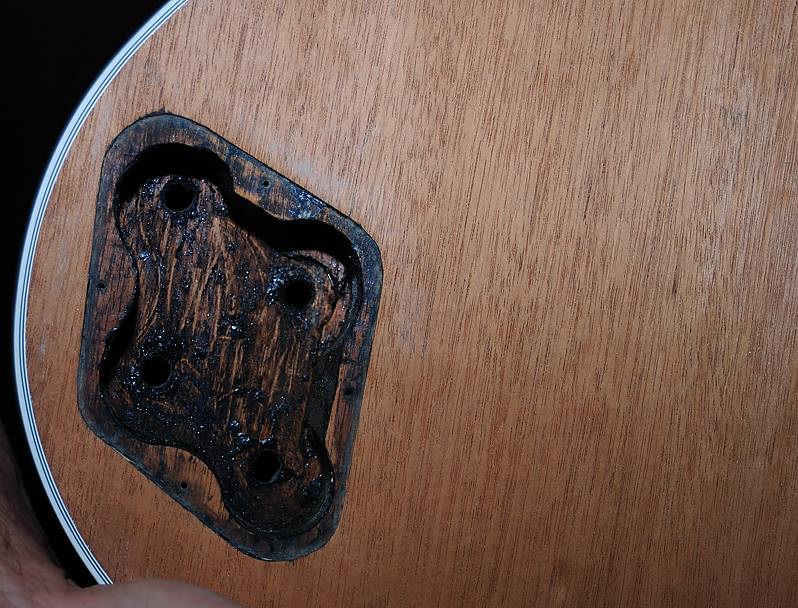
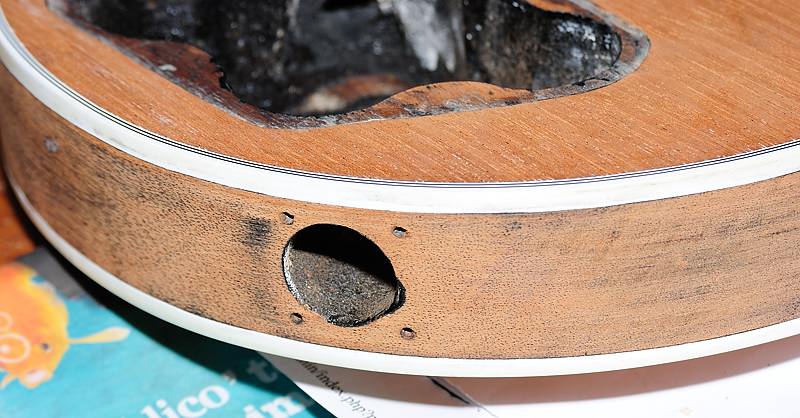
The binding(WBWBW) is also original and in very good condition.
The neck is also made out of one-piece Honduran mahogany with "wings" on the headstock. Ebony fretboard. The radius is 10", not 12" like other Gibsons. The back of the headstock had the serial number applied with "letraset" when Enrique bought it. After restoring it, a rubber stamp with the original font was used. These guitars never bore the engraved serial number or "Made In USA". The fretboard inlays are larger than those of the later Customs. Gibson in its reissues do not always respect this original size and make them smaller, as in modern Customs. On Custom LPs of this era the last three inlays are all the same size.
These guitars were nicknamed "Fretless Wonders" because they had extremely low and narrow frets. This one had bigger and worn frets. Enrique Garcia refretted the guitar with Medium Jumbo frets (Jescar 45100). These guitars had "nibs" (nubbins) that were as high as the original frets, that is, very small with a tendency to wear out in a very short time. In any case, this guitar already had the frets changed and the "nibs" removed, so the decision to go with Medium Jumbo frets was ideal. Now it's a delight to play this guitar which, frankly, it wasn't beforehand.
The neck has an inclination of 17 degrees at the headstock and 4.6 degrees with respect to the body.
The side markers are "tortoise", typical of '50s LPs.
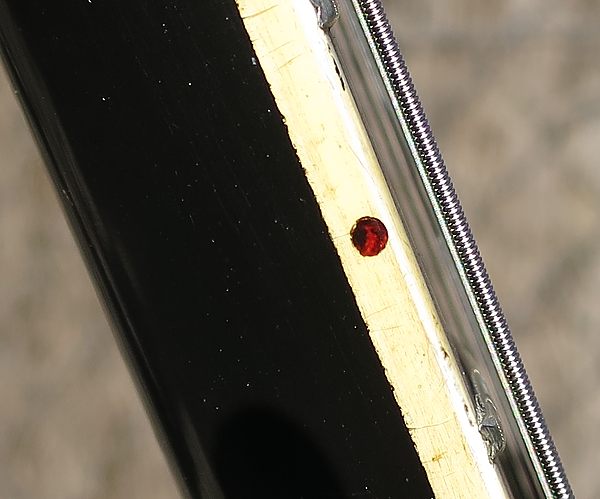
The maple strip covering the truss rod is 1/4" wide.
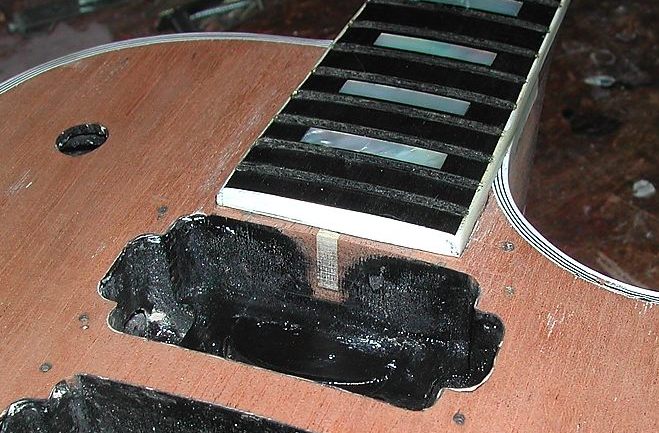
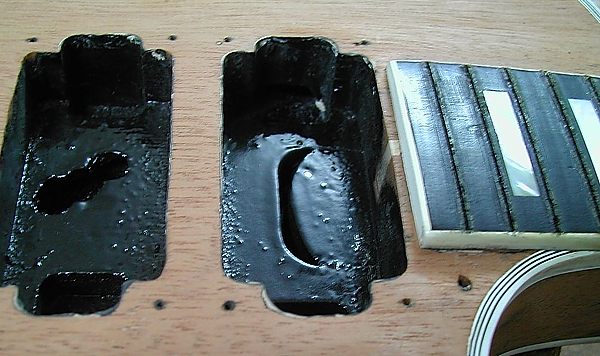
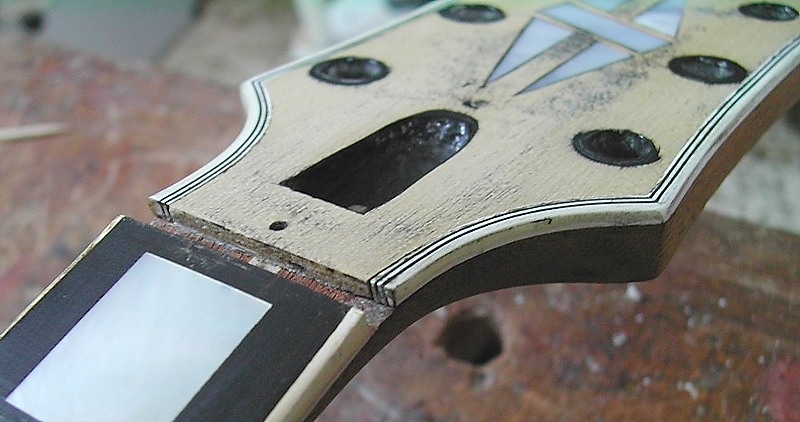
Truss rod: in the '50s the truss rod was not housed in a curved groove. It was a straight channel just to gain stiffness more than to compensate for the curvature of the neck since these were already quite thick. In the 1960s, with the arrival of the thinner necks, the truss rod began to be housed in a curved channel, which meant that in addition to achieving rigidity, it was also possible to straighten the neck more easily. The access hole to the truss rod nut has a peculiar rounded shape. Gibson does not respect this shape on the new reissues.
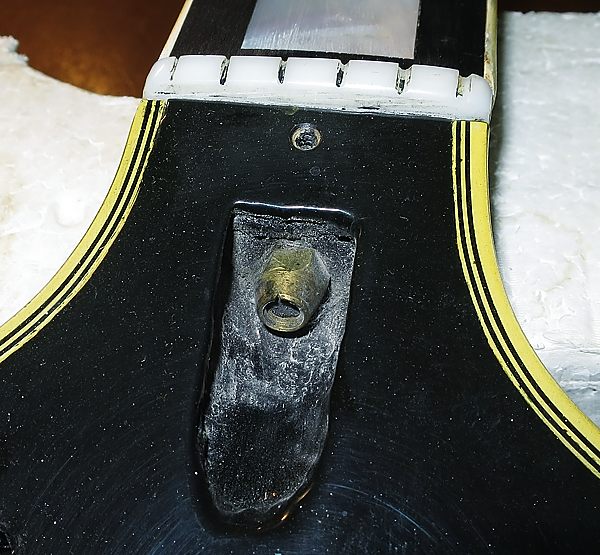
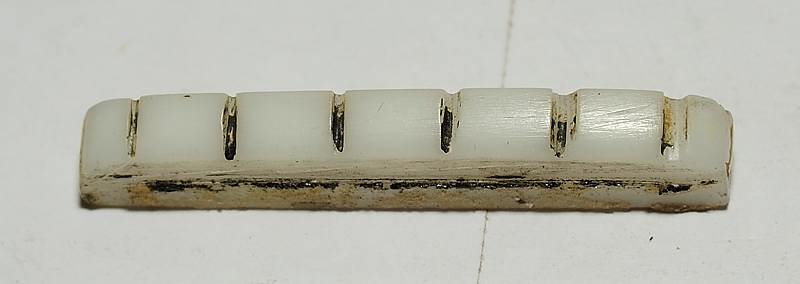
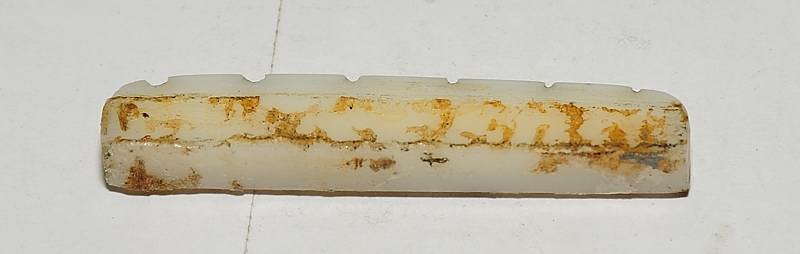
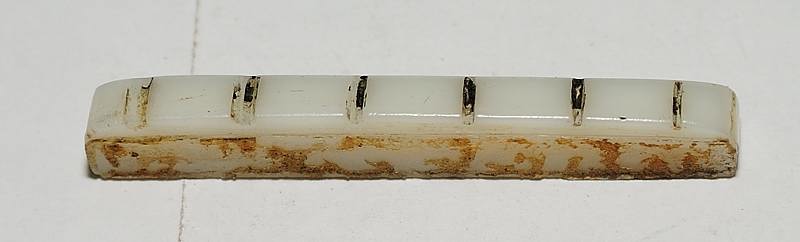
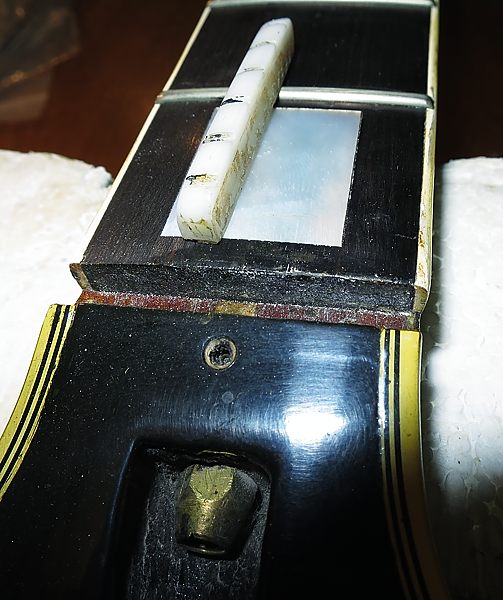
The nut, already original, is made out of nylon:
Regarding the scale length it's necessary to clarify that is NOT the allegedly standard scale for Gibson (24 3/4") but 24.625" instead. This is not rare with these guitars and other brands too. If you want to know more about it just watch this YouTube video: Gibson and Martin Scale Lengths Explained.
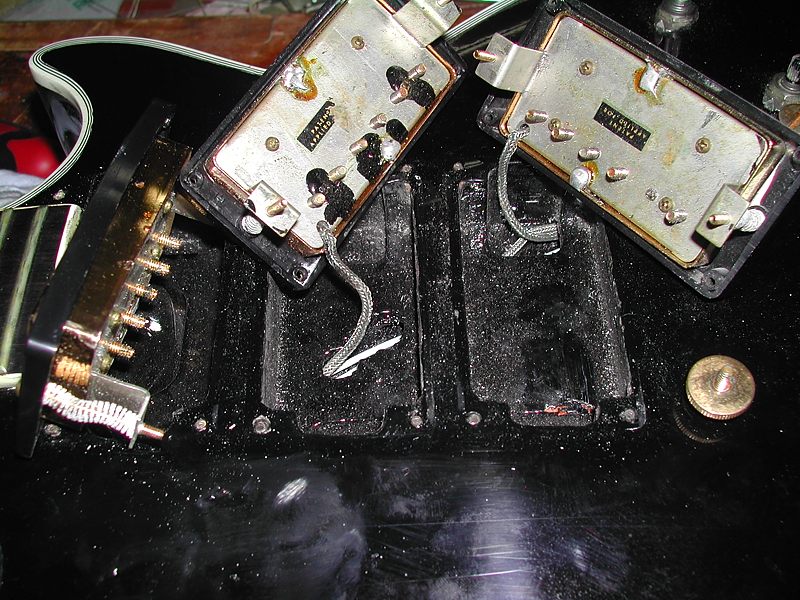
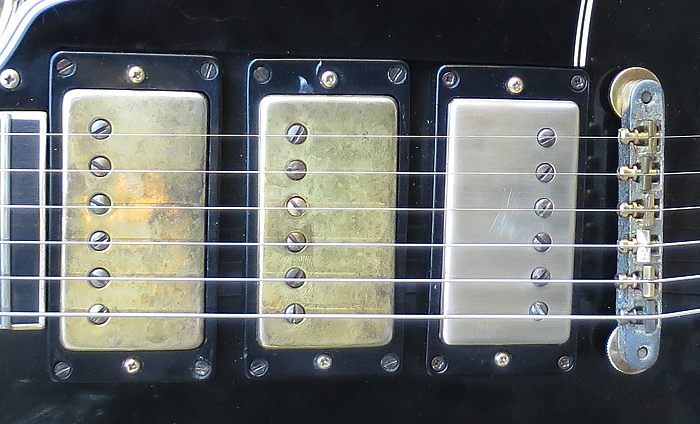
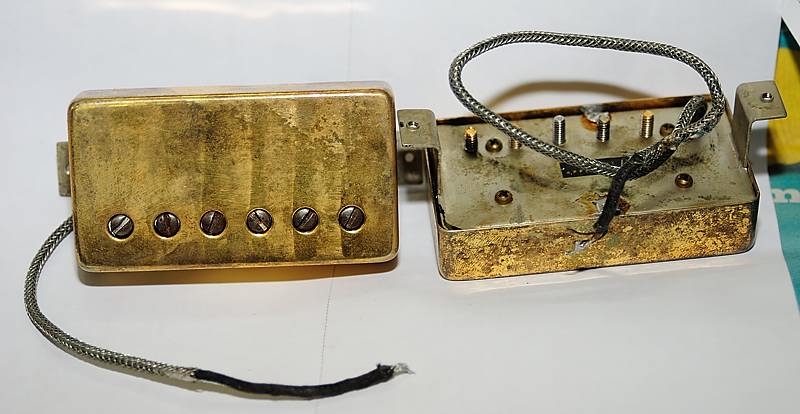
The guitar has three original "PAF" (Patent Applied For) pickups with their covers. As seen in the photo below, the bridge pickup barely shows a hint of the original gold plating.
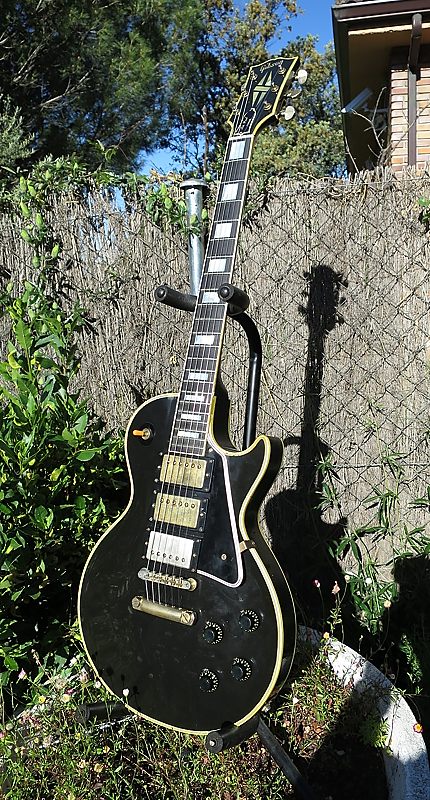
The center pickup is out of phase with the other two, just as it came from the factory, producing a distinctive "middle" sound that not everyone likes (this was then a Jazz guitar!). Many people turned the center pickup to get a more standard sound, but this one respects the original configuration that appears in the catalogs of the time. In the 1959 Gibson guitar catalog you can see, on page 15, that the guitar pickups were originally placed the same as this. Curiously, in that catalog the typical "burst" of this year and the previous (and the next for that matter) does not appear as a real burst, showing a photo of a 1956 type LP instead (Goldtop with tune-o-matic and P90s ) with the text of a 1957 LP (humbuckers). If you google the 3-pickup Customs from the '50s you'll see that many have the middle pickup already inverted to try to make the middle switch position sound more "normal". This quick solution mitigates the problem only a bit but to correct it completely it would be necessary to at least open that pickup and modify the position of the magnet.
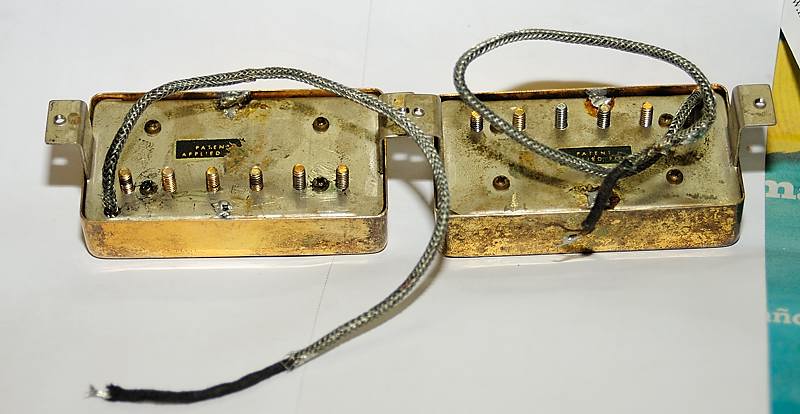
It is not a complicated task. When guitarists, especially in the UK, started the trend of removing covers from the humbuckers to get more power and more easily overdrive the Marshalls, some technicians discovered that by unscrewing the four screws from the bottom plate it was easy to remove the magnet bar and rotate it 180 degrees to get the "out of phase" sound when both pickups were selected at the same time (i.e.: Peter Green). This simple procedure can be followed here to make both pickups sound "in phase" in the middle position of the switch, producing a much better (canonic) sound.
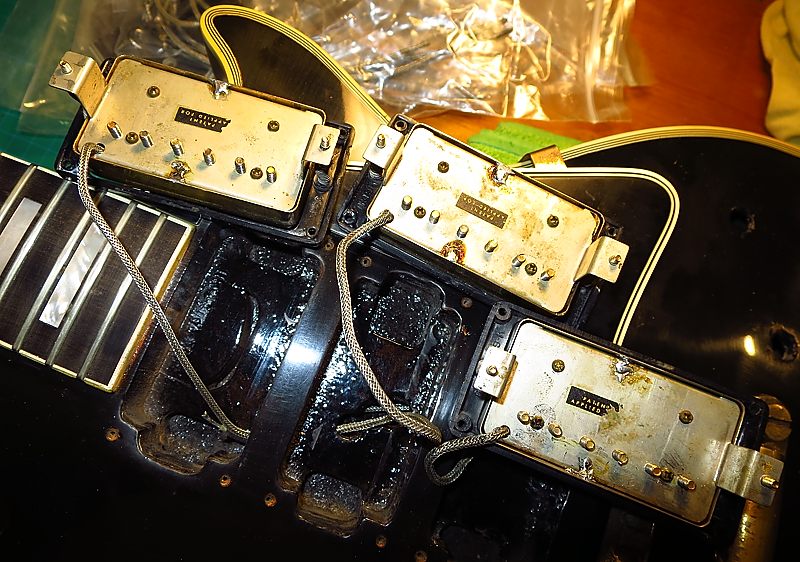
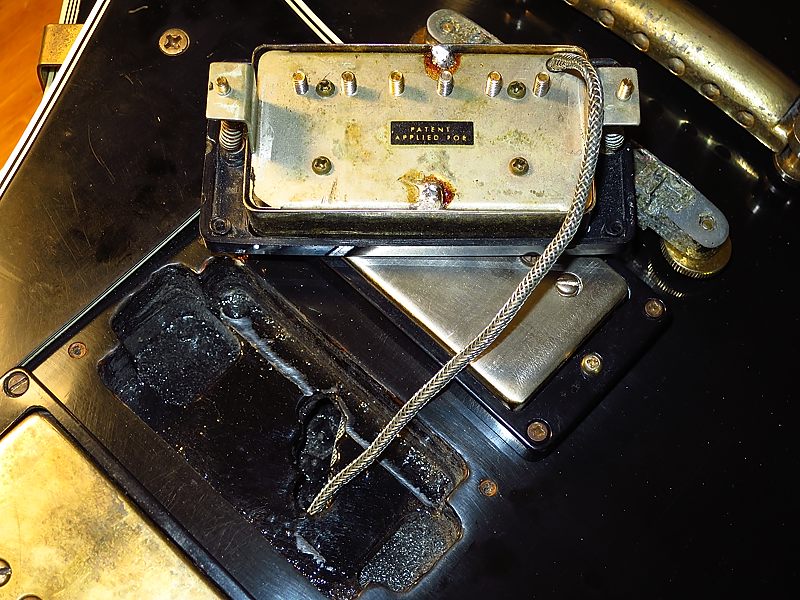
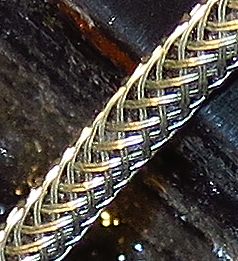
The correct pickup wires for that era with two-strand braided shield instead of three strands as in the modern counterparts.
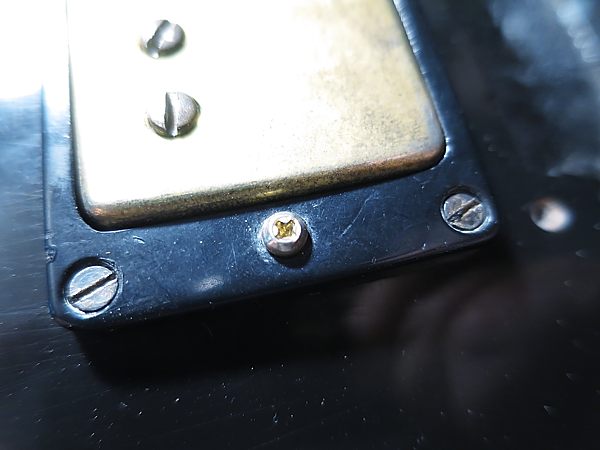
Interestingly, the pickup ring screws, being original, are different from each other. The screws on the first two pickups have slotted heads but those of the bridge pickup are Phillips, this being frequent on these guitars at that time.
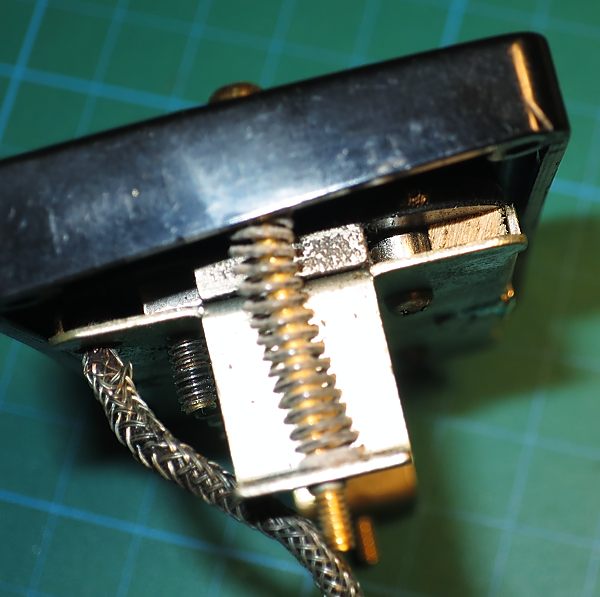
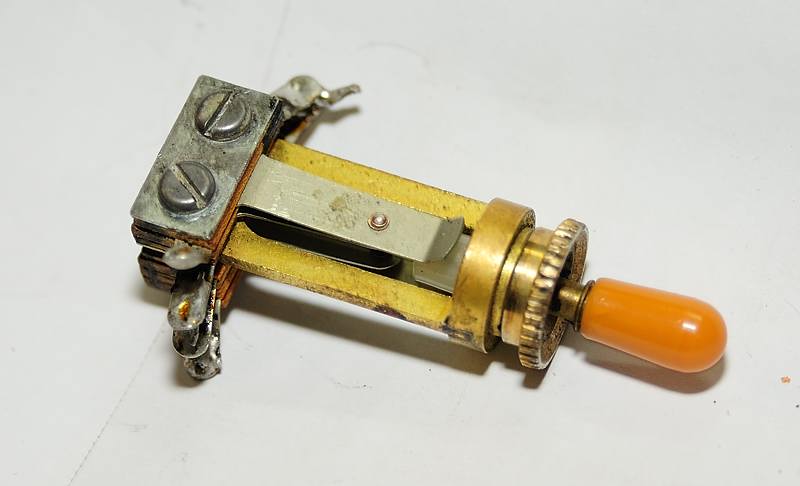
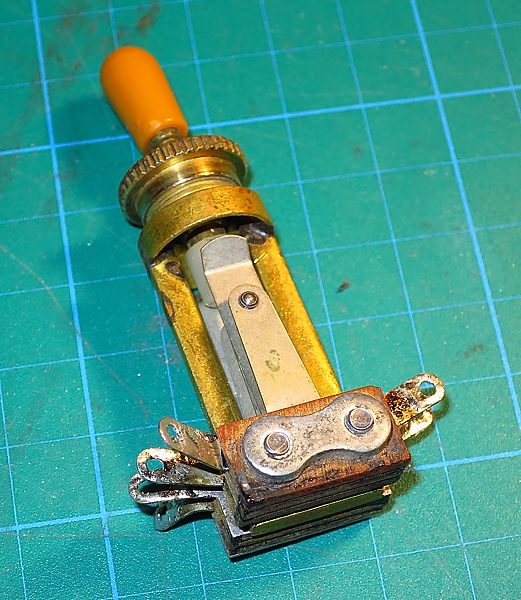
First of all, in this guitar, like with some other 3-pickup Gibsons, the electronics differ from the usual Les Paul wiring. For instance, the switch positions are:
This implies that the switch is special for these 3-pickup guitars and is not compatible with the switches for 2-pickup guitars. In the fifties Switchcraft switches did not sport the printed brand. It was back in the '60s when they started stamping "SWITCHCRAFT" on one of the legs.
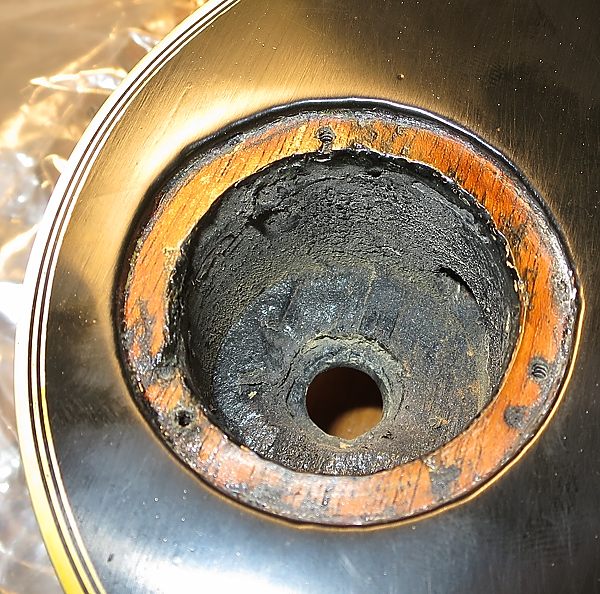
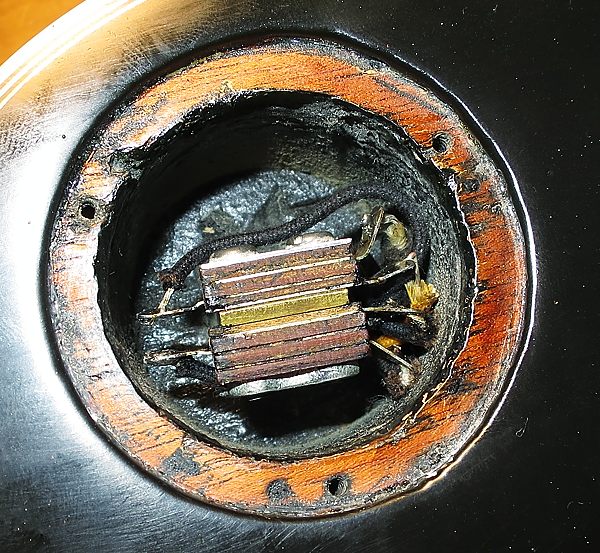
Of course the wiring schematic is different from that of the normal Les Paul:
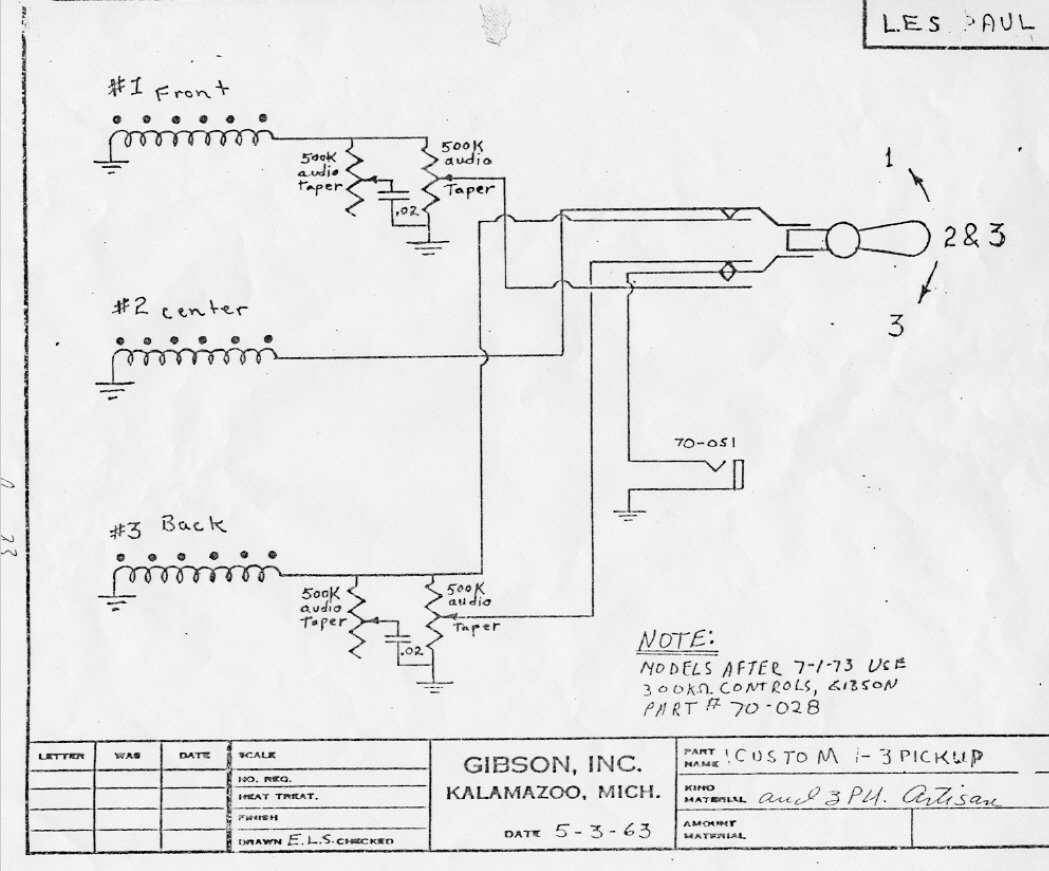
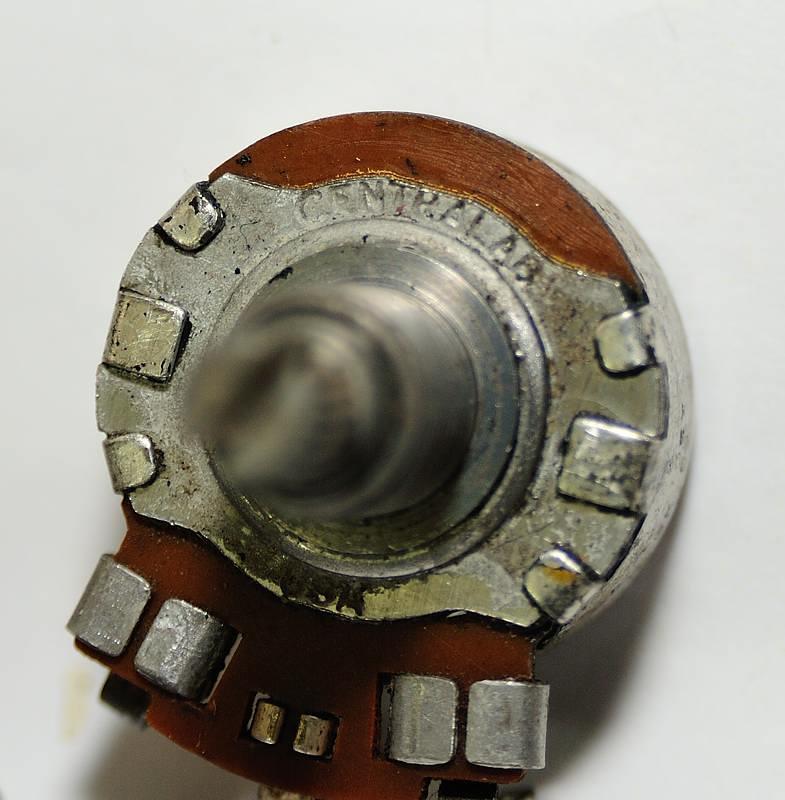
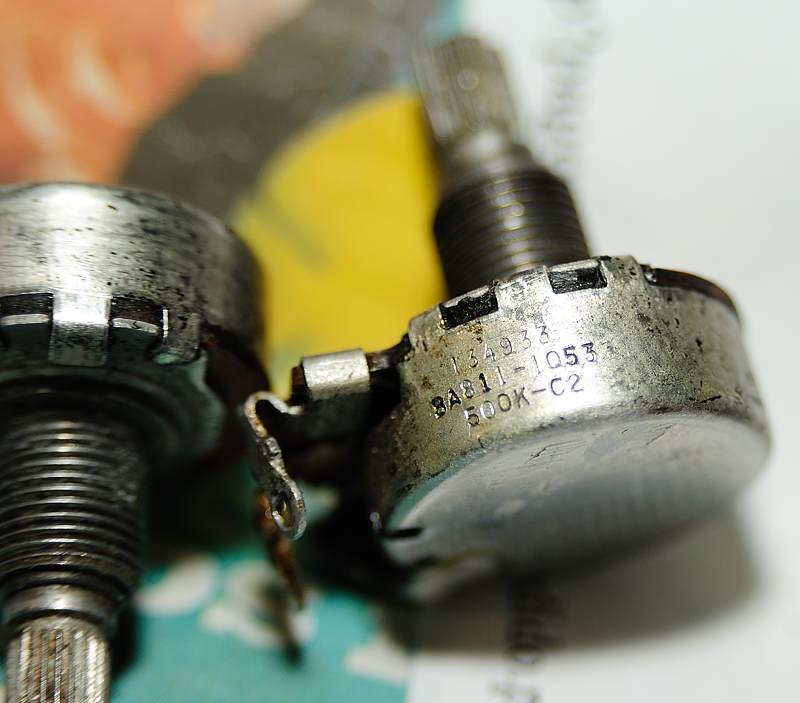
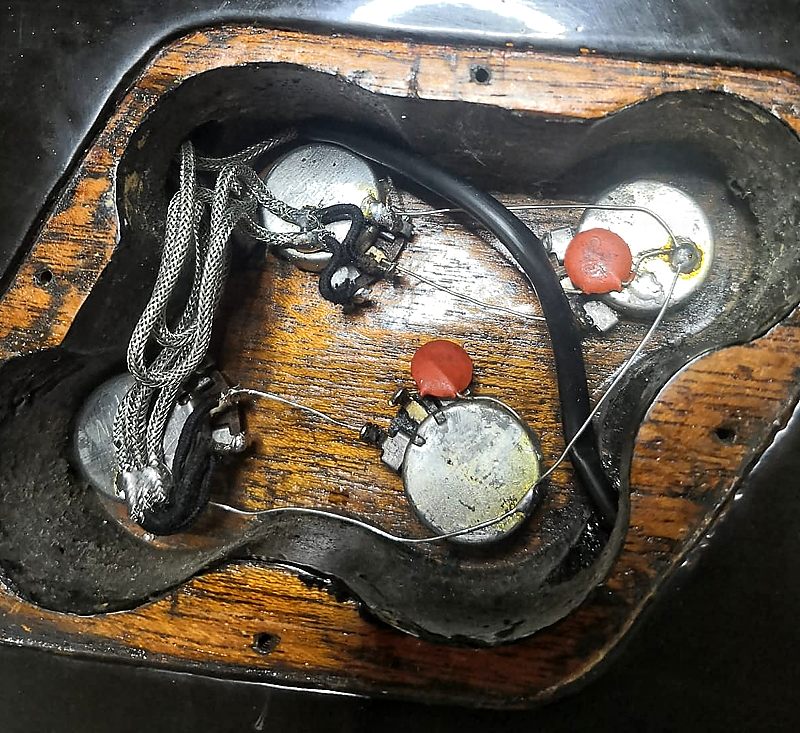
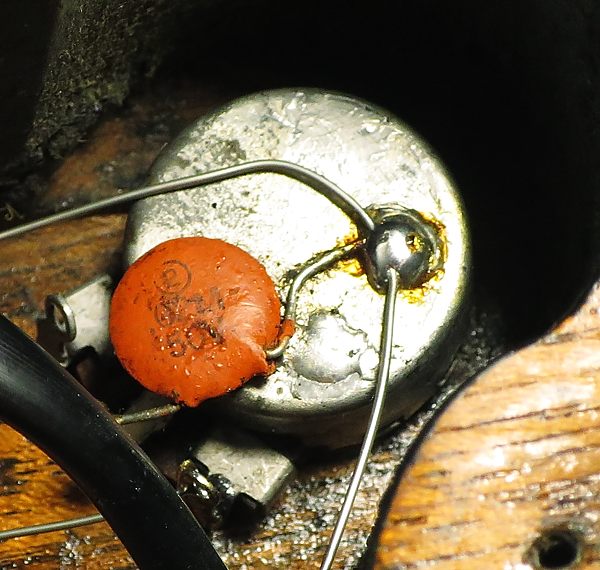
Regarding the potentiometers, as indicated in the diagram, it was not until 1973 that they were changed to 300K pots, so in this one, being original, they are 500K log. each. They're all branded CENTRALAB and dated the 33rd week of 1959:
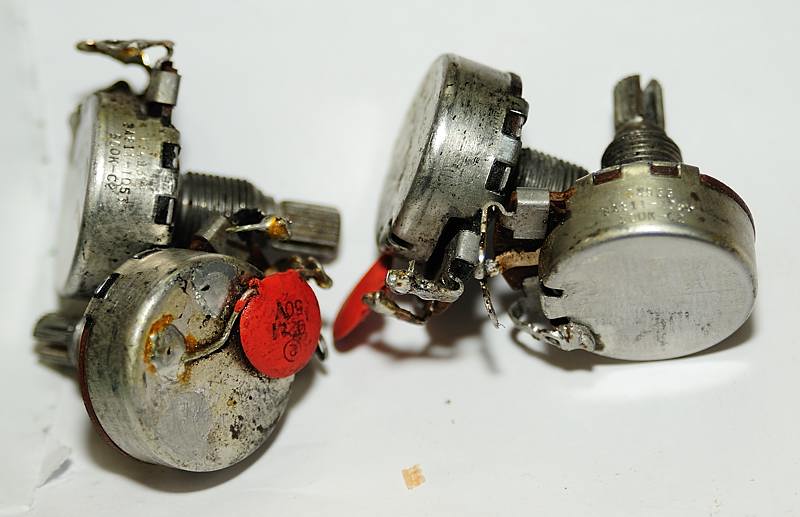
The capacitors are also original, 20nF and 50V disk ceramics. There is a general misbelief that all the caps of that time were Bumblebees or Black Beauties, but as we can see, this was not always the case.
Potentiometers are not "long neck". They did not exist at that time. The potentiometer cavity was adapted (routed) to this type of controls.
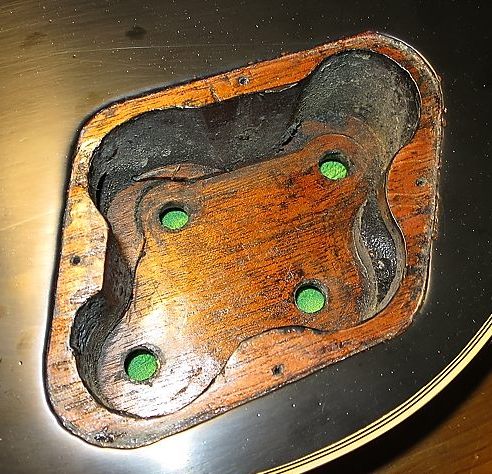
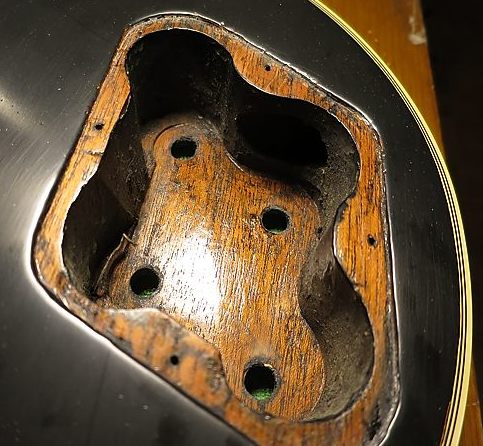
Here you can see them already installed in their final place:
The jack is also the original Switchcraft, in perfect condition despite its many years:
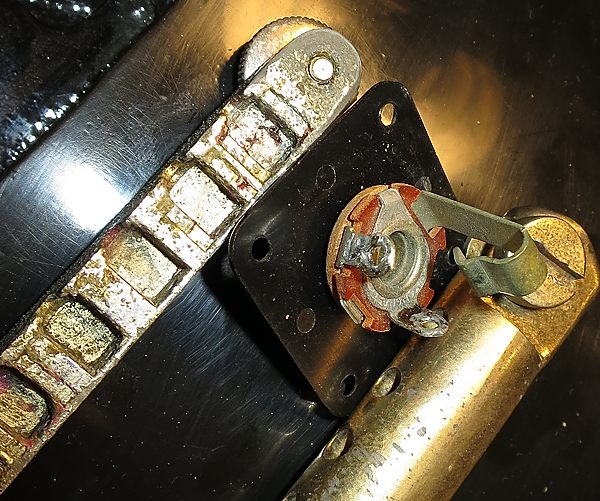
As I've previously said, when the guitar was repainted in polyurethane, some worn hardware was replaced: tailpiece, bridge, tuners and some screws, in addition to the cover of the electronics cavities and the cover and ring of the switch, for some new Gibson parts from the '90s but kept all the originals from '59 in the case. After the restoration all the original pieces returned to the guitar.
The tailpiece is made of lightweight aluminium. Despite the age, obvious wear and loss some plating, the original is in a fairly good condition.
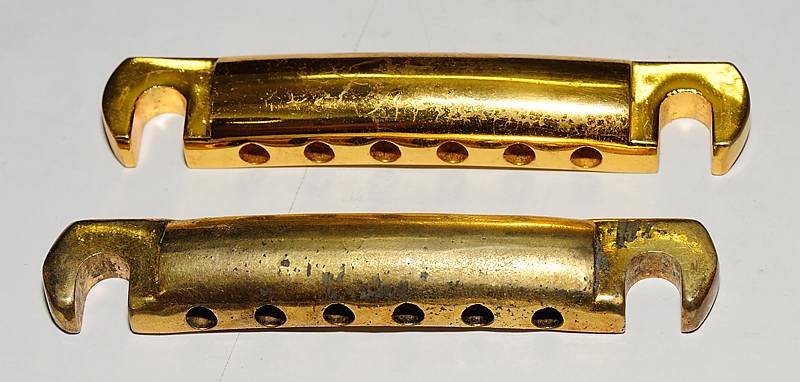
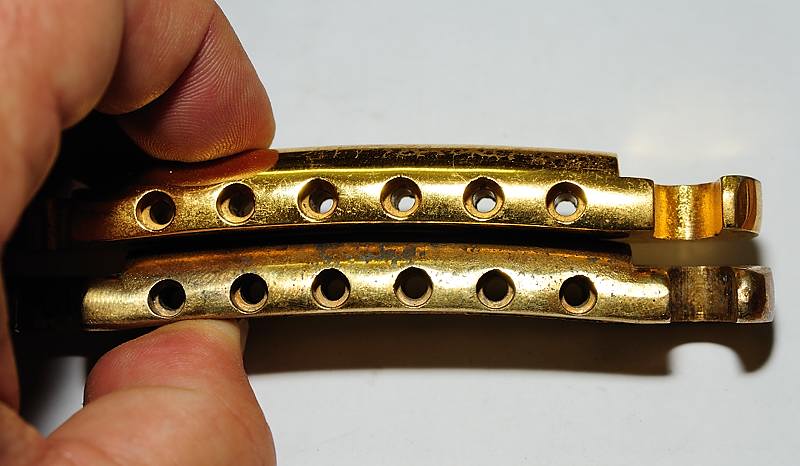
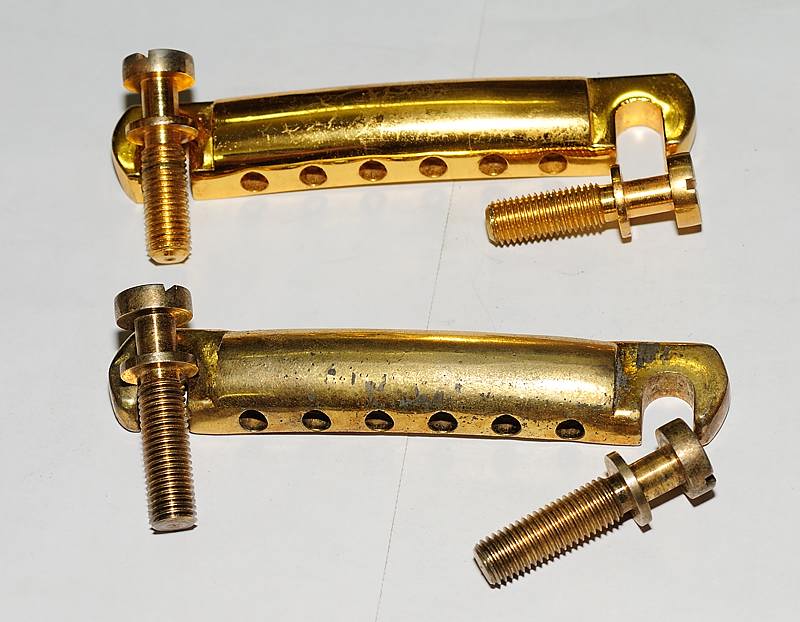
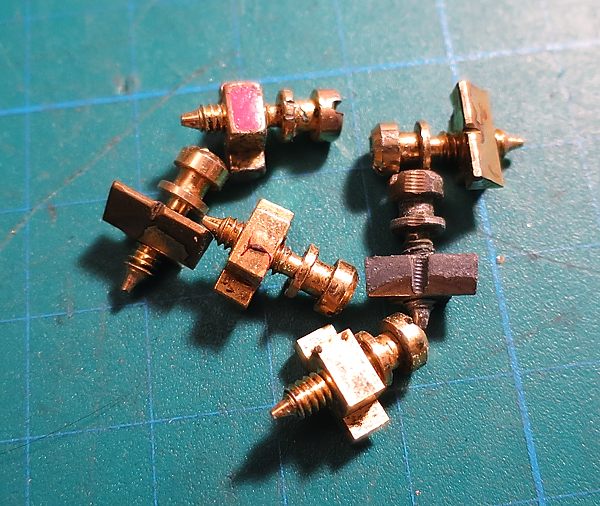
The '59 tailpiece studs are longer than the modern counterparts. Contrary to the new replacements, they were made of steel:
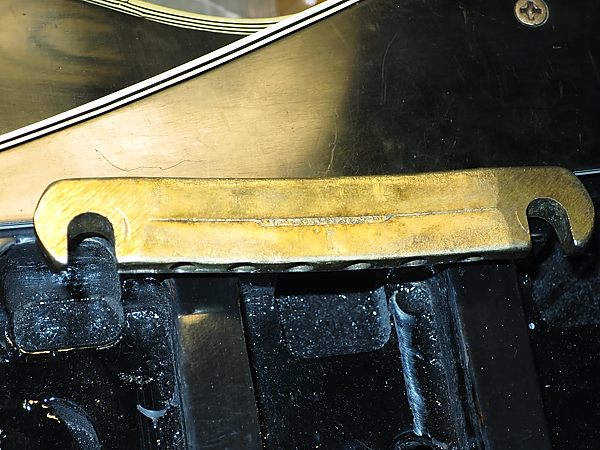
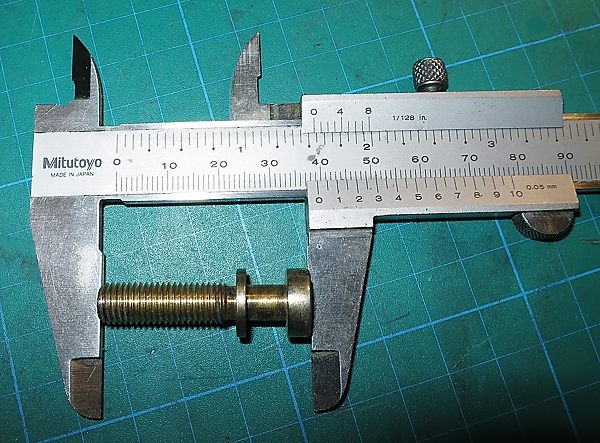
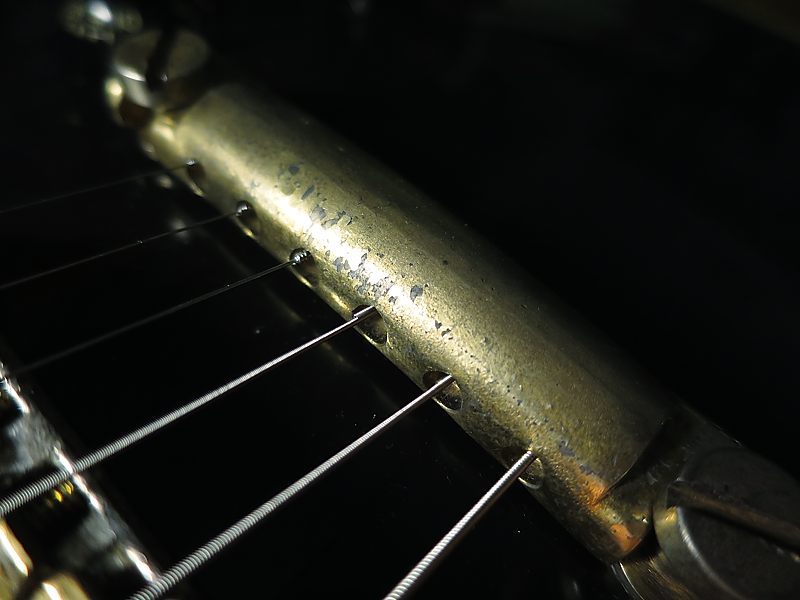
The bridge is a "Tune-O-Matic" without the "wire" used to prevent the saddles from being lost in the event of a broken string, as they were at that time. It's pretty worn and corroded, but still a '59 original:
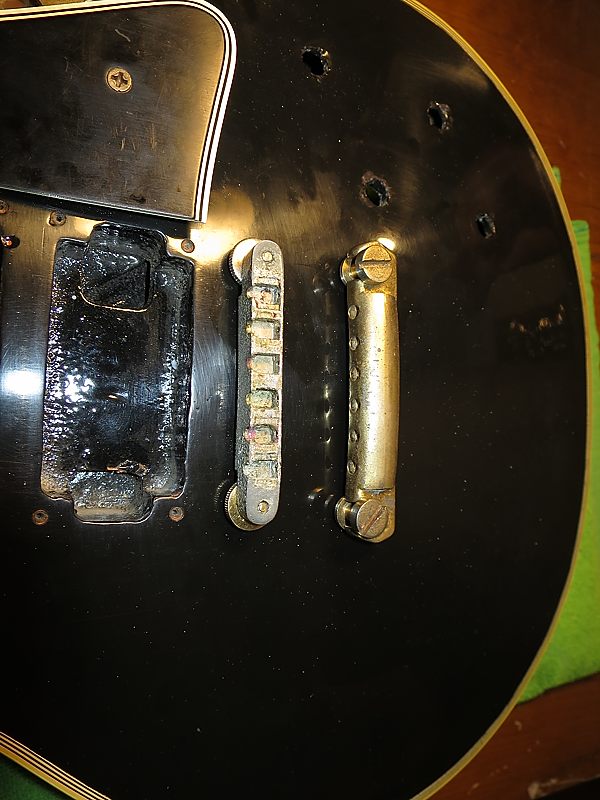
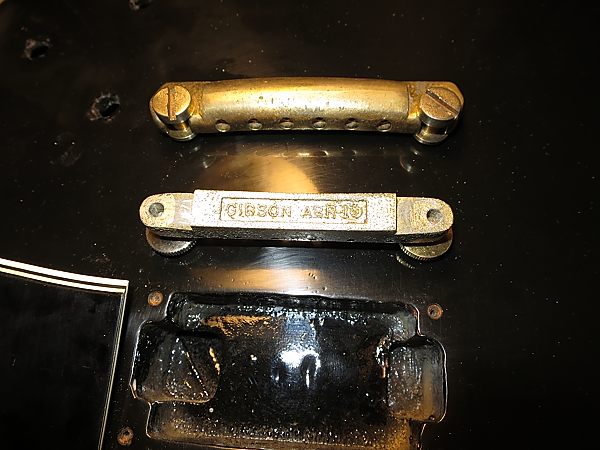
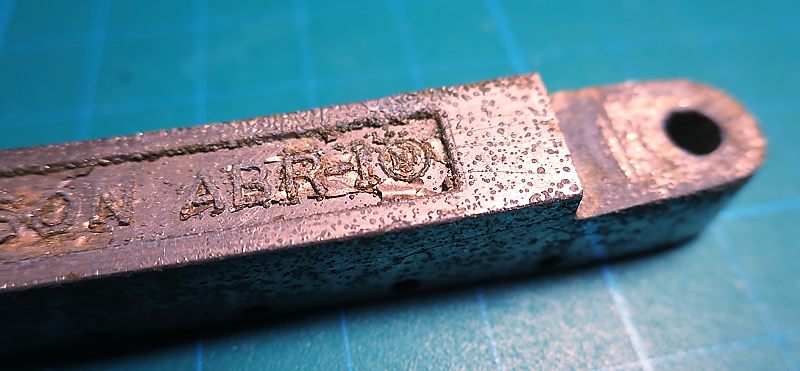
The height adjustment screws of the bridge as well as its height adjustment nuts are also original.
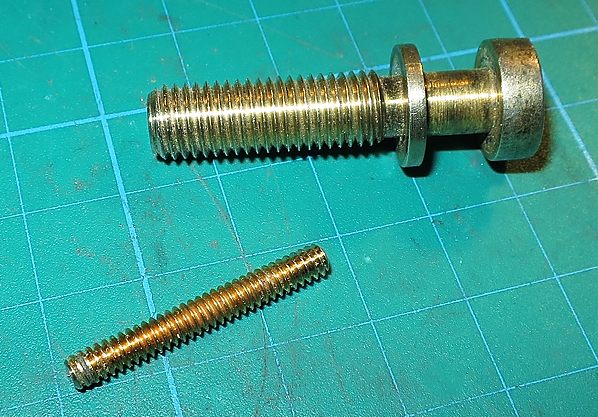
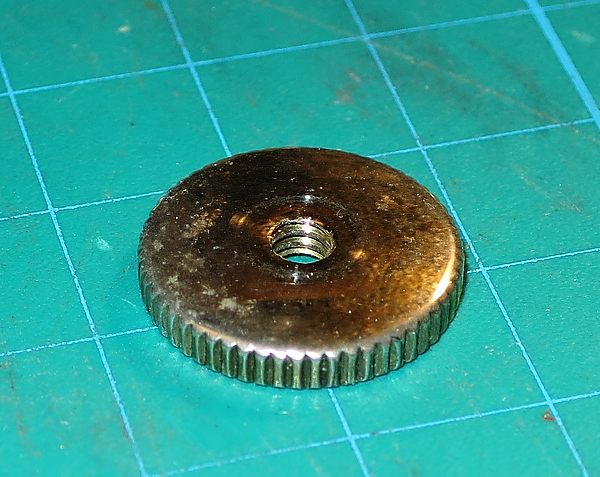
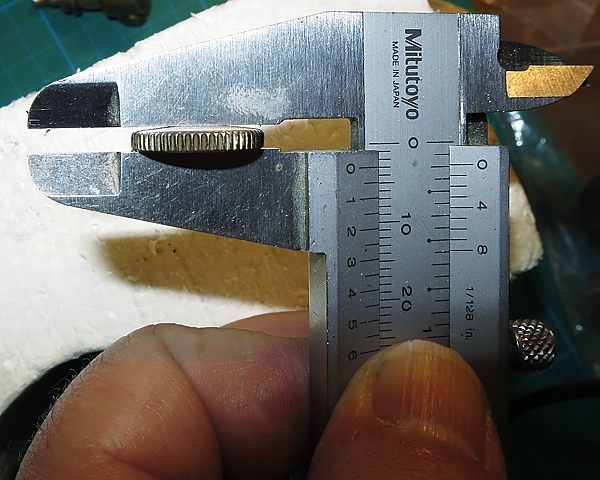
The round height adjustment nuts have, as they were in that era, a domed upper face and not flat on both sides like the modern replacements. This has the advantage of smoothing out the natural sway of the bridge, allowing it to more easily return to its in-tune position on guitars with Bigsby type bridges. In case you want a more rigid setup, just turn them upside down so the bridge sits on the flat side of the nut.
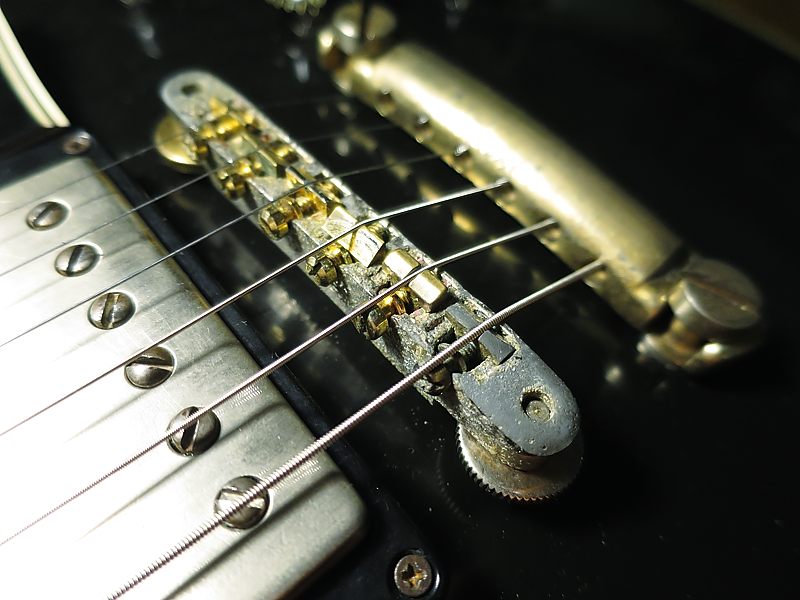
As you can see in the photo above, some saddles were replaced a long time ago either because they were either too degraded or lost due to broken strings:
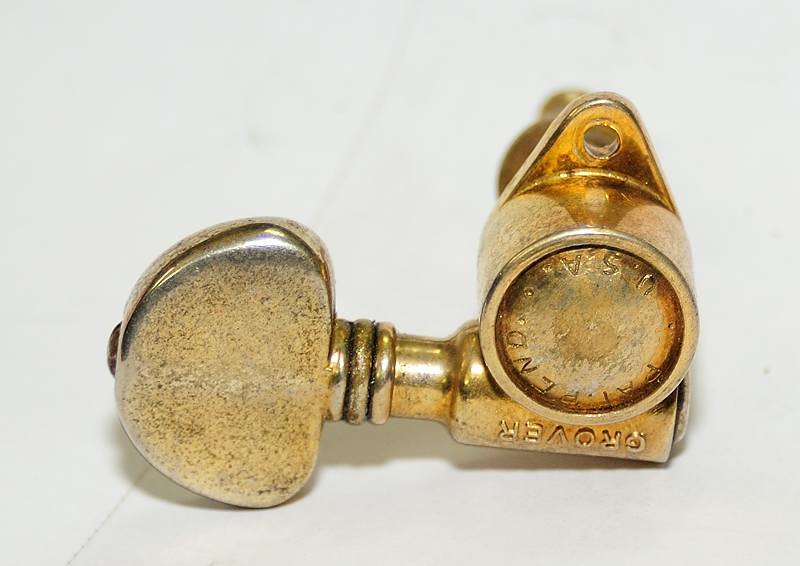
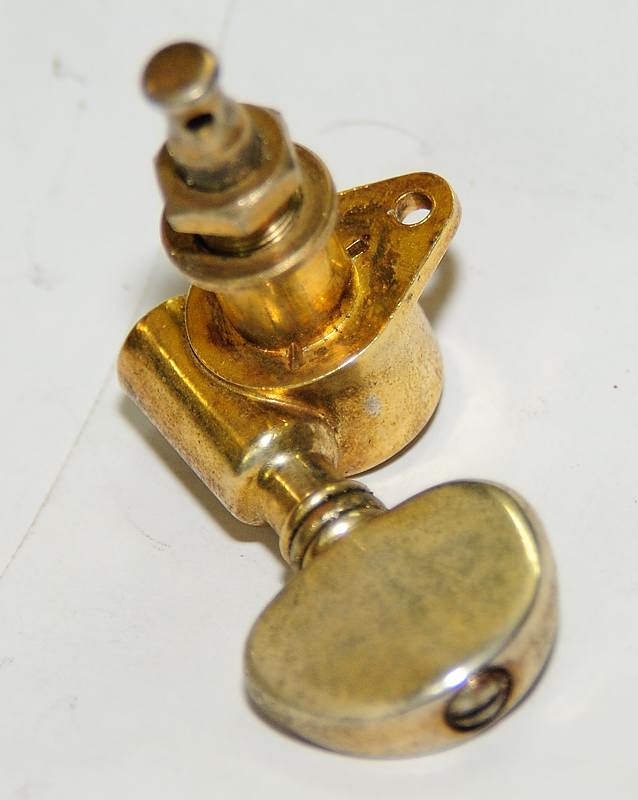
The tuners are original Grover "Pat. Pend. USA" Rotomatic 102-G (G for Gold), a classic on high-end Gibson guitars of that era.
Now a couple of photos of the back of the headstock. The first, already seen above, when it was painted in polyurethane and with the "Letraset" type serial number. Next the headstock already lacquered in nitrocellulose, with tuners installed and with the serial number made, as we have already seen, with a rubber stamp with the correct font, respecting the way of doing things at that time:
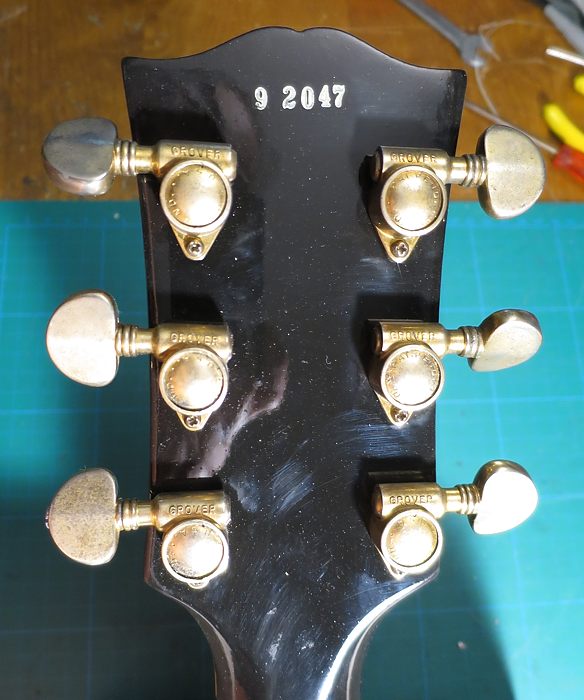
Regarding the serial#, the number that was in the initially repainted guitar was respected. There is no reason to believe that the number is incorrect as the rest of the guitar is all 1959. Whoever repainted the guitar in polyurethane probably simply copied the original number the best way he could. Unfortunately it is well known that Gibson's records for the years 58, 59 and 60 have disappeared from their archives, so the option to ask Gibson about this guitar is not applicable.
The golden aluminium strap buttons and their screws are also original.
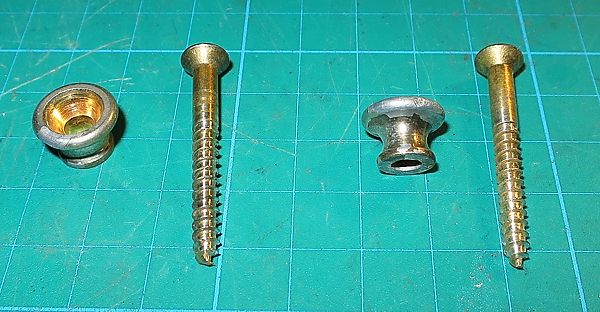
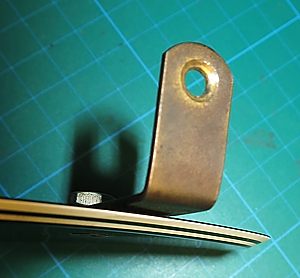
Finally, within this subject, the pickguard support is the original, since it was not replaced at any time.
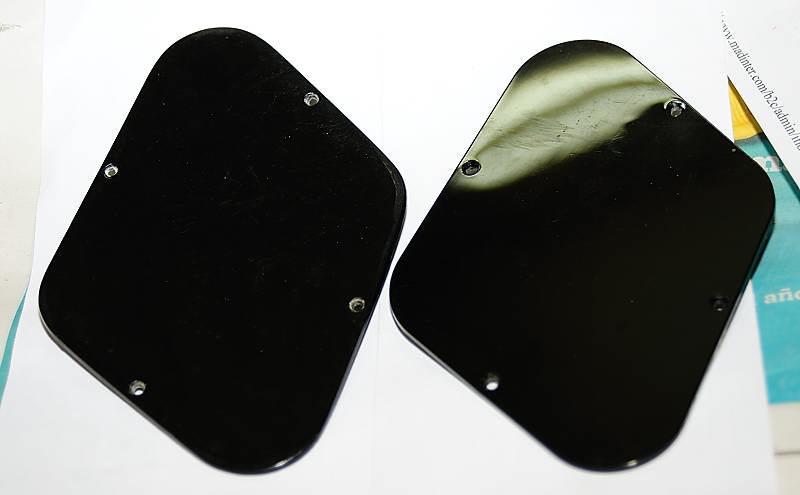
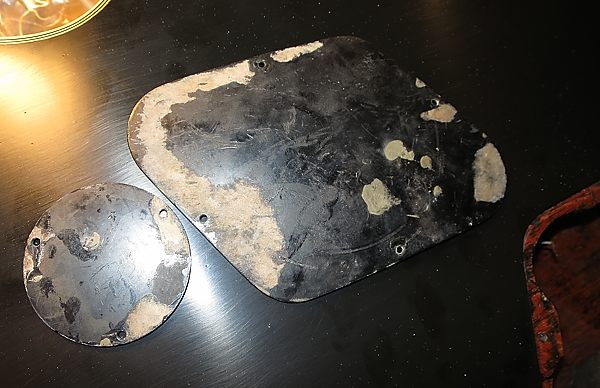
The guitar had new plastic back covers from the '90s, also keeping the originals in the case. The '59 ones were reinstalled after the restoration.
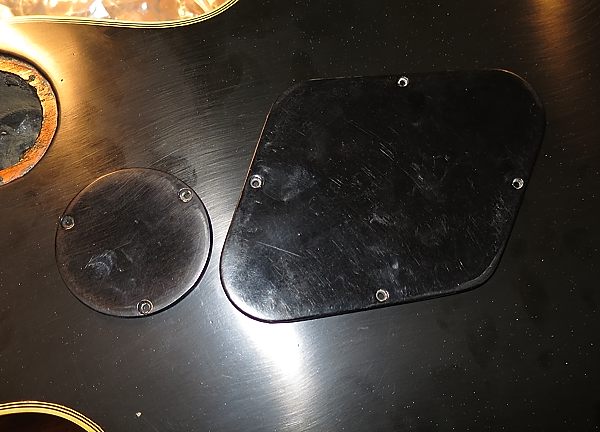
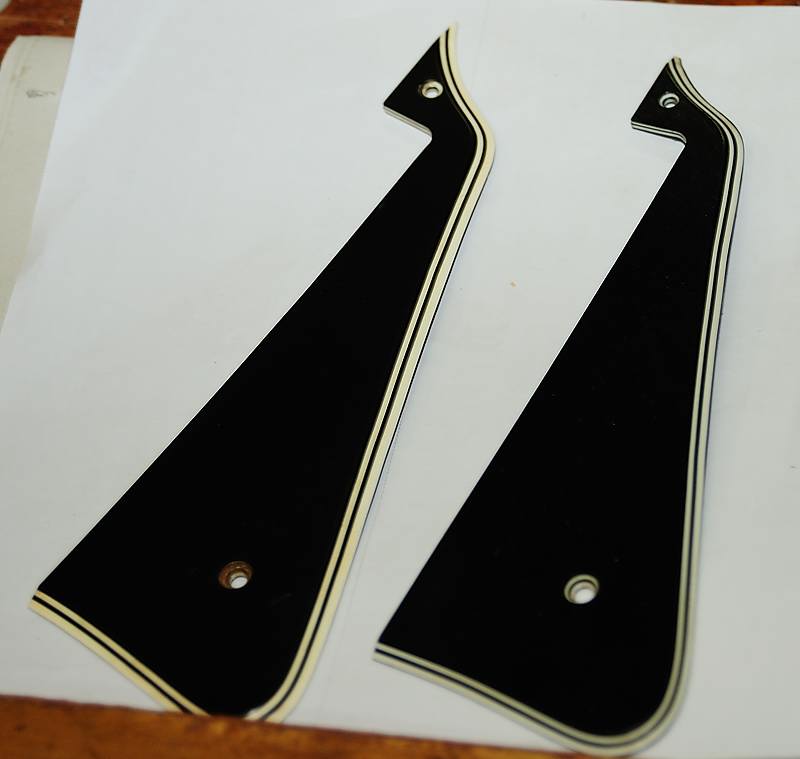
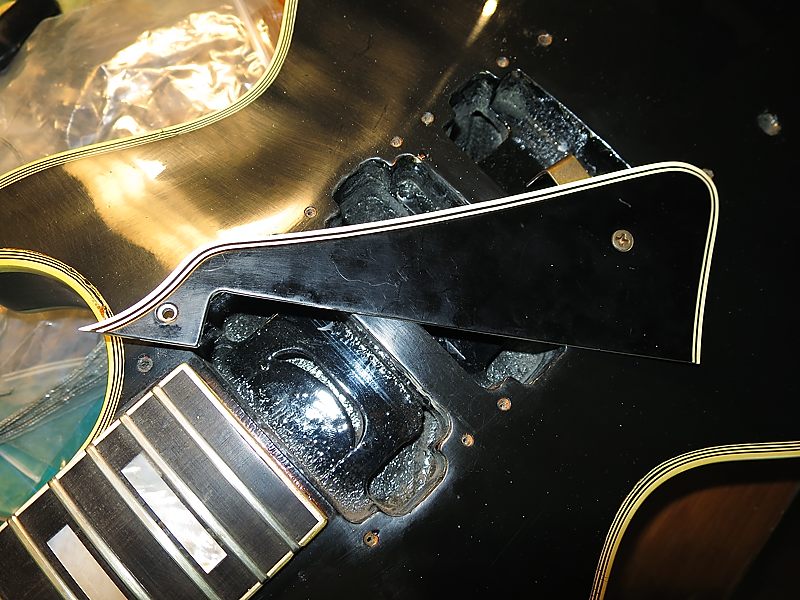
The same thing happened with the pickguard and again the original was reinstalled. The original has a 30 degrees chamfer while the later ones are chamfered at 45 degrees.
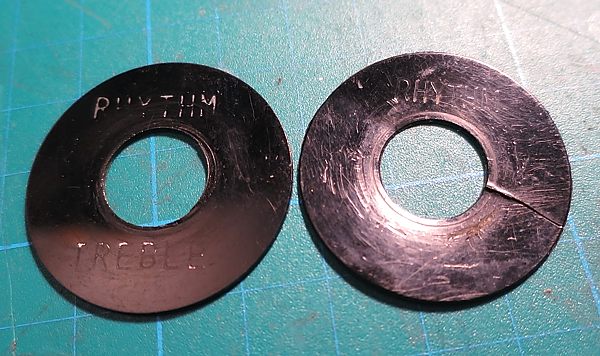
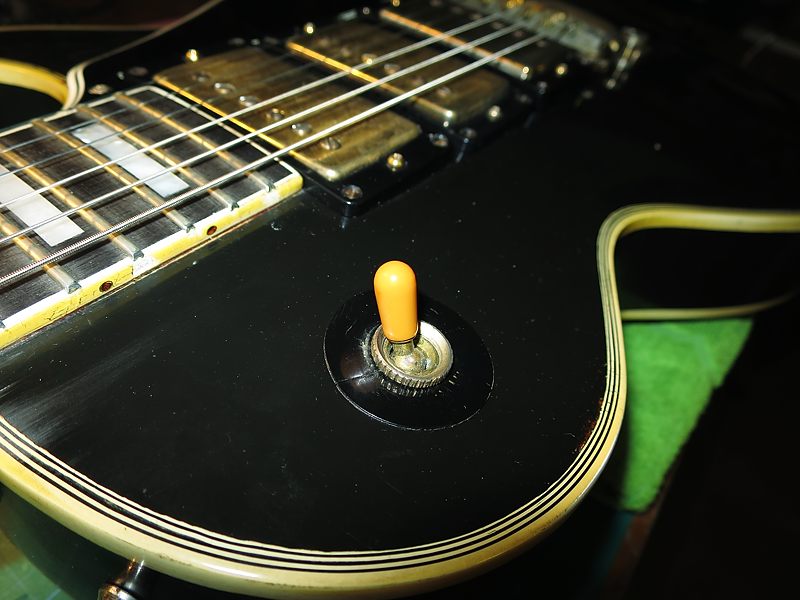
The original plastic switch ring, also in the case, is broken (they were very thin). The guitar had a worn but whole '90s ring. The original was reinstalled after reinforcing it at the back to prevent it from splitting any further.
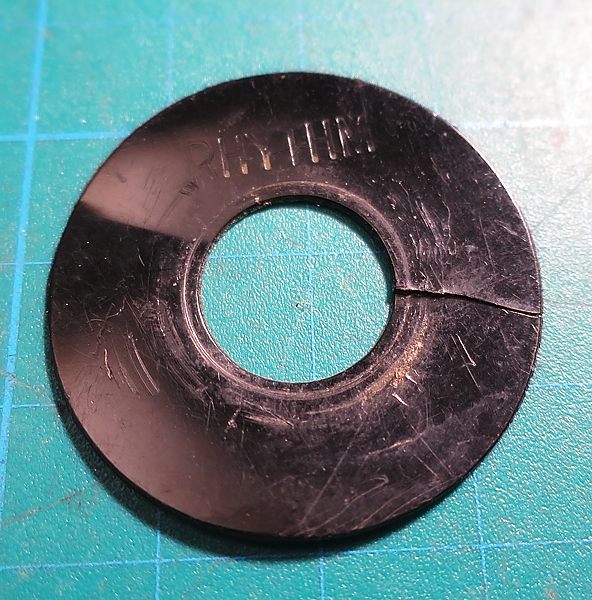
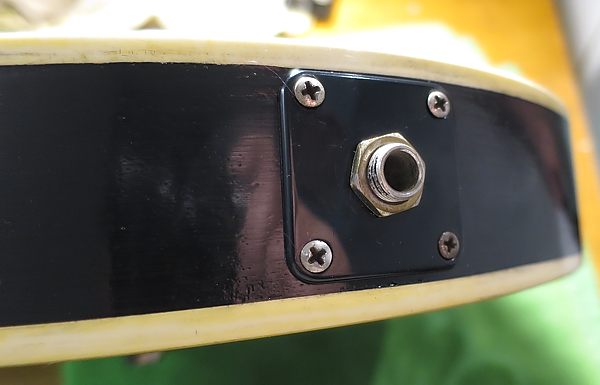
The jack plate, again original, made of thin black plastic, typical of that era. It's surprising that such a high-end guitar like this doesn't have a golden metal plate, but that's how they were at the time. It is also curious that, being the original, it's not broken since it is quite fragile.
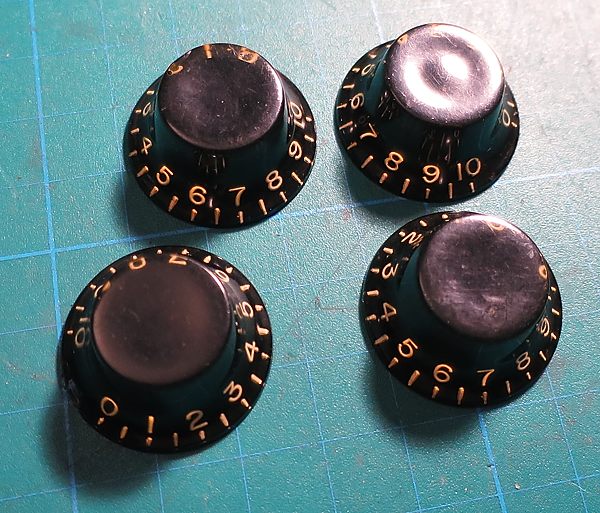
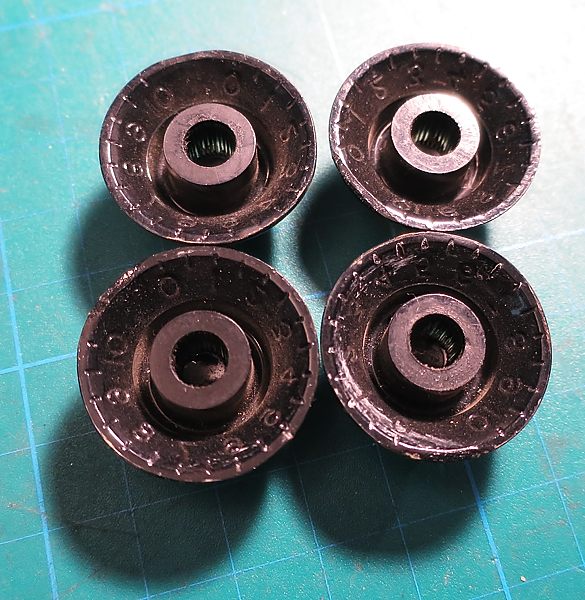
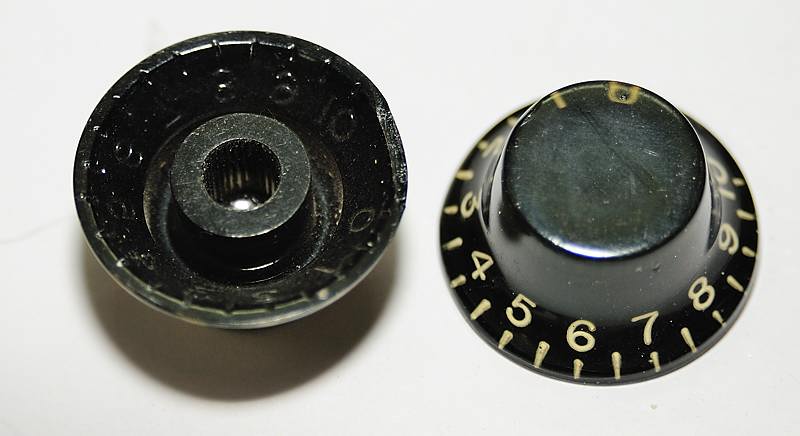
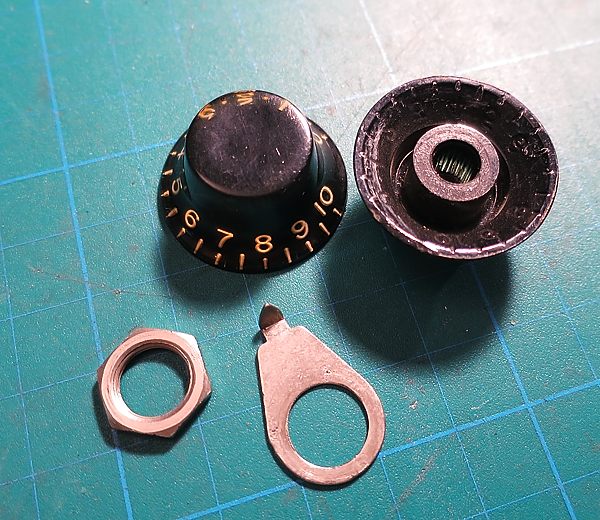
The potentiometer buttons are in a very good condition, without the typical cracks after many years of use:
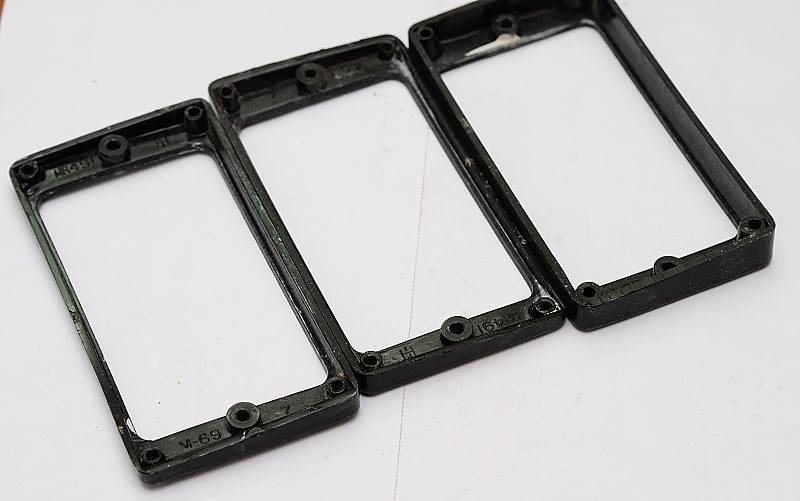
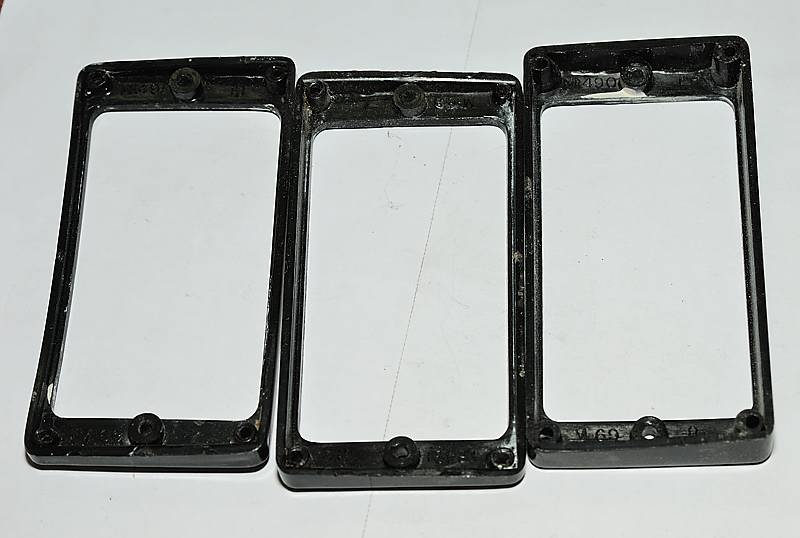
The pickup frames are also in very good condition:
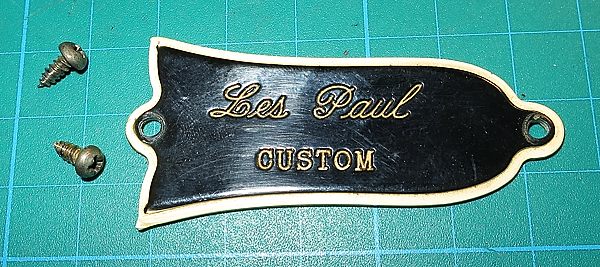
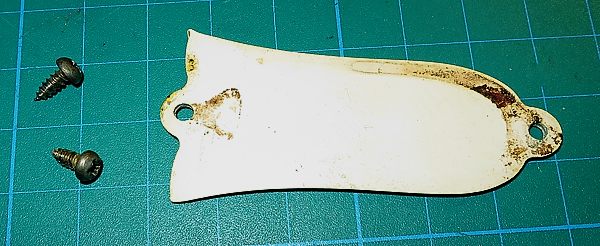
The truss rod cover (bell) is also original.
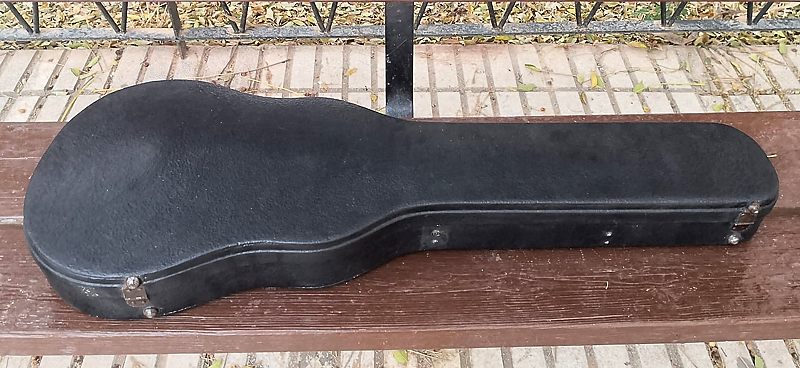
It is the original LiftOn in very good condition for its age, with golden yellow interior and working HW. It has a new handle because it came without it. The case has been professionally restored to the original rough black and now it's in a great shape again:
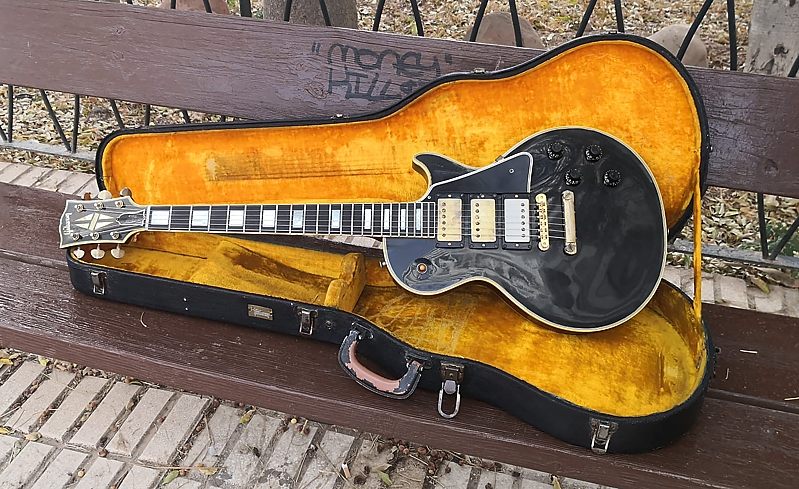
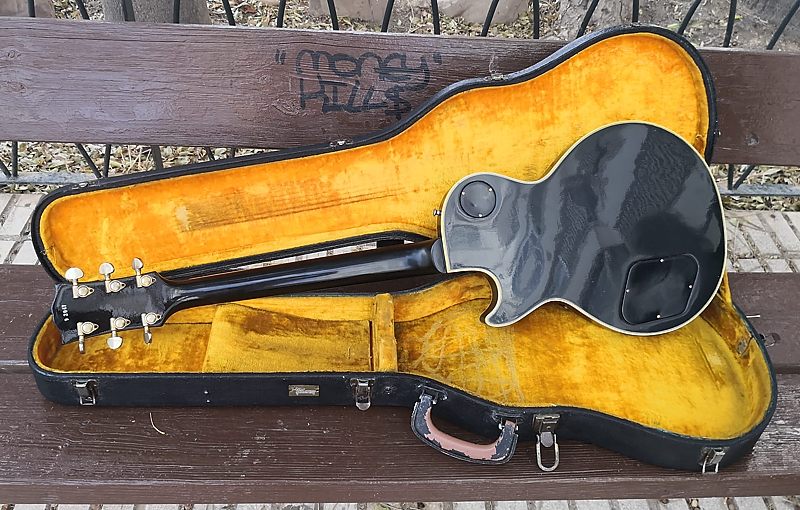
Now let's see some more images of the completely restored guitar:
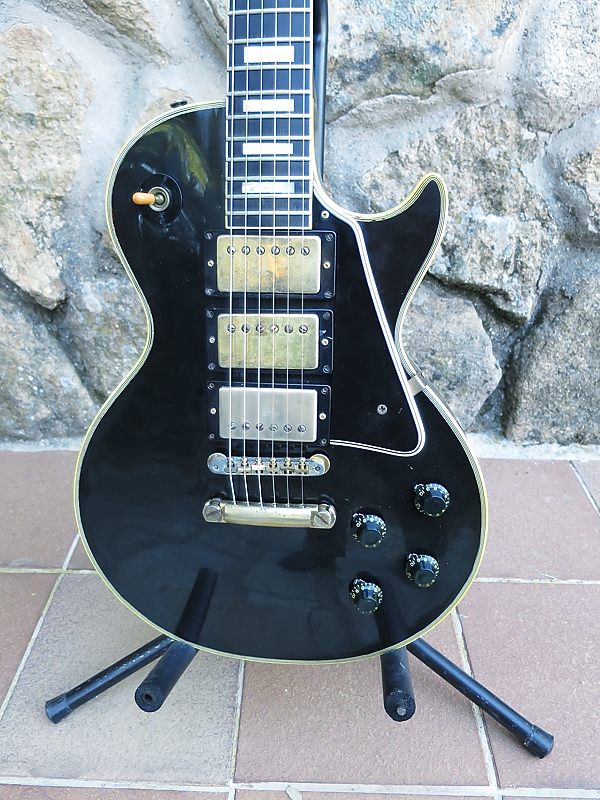
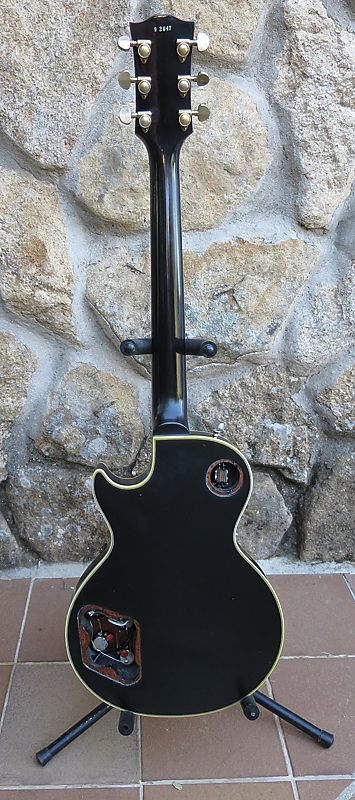
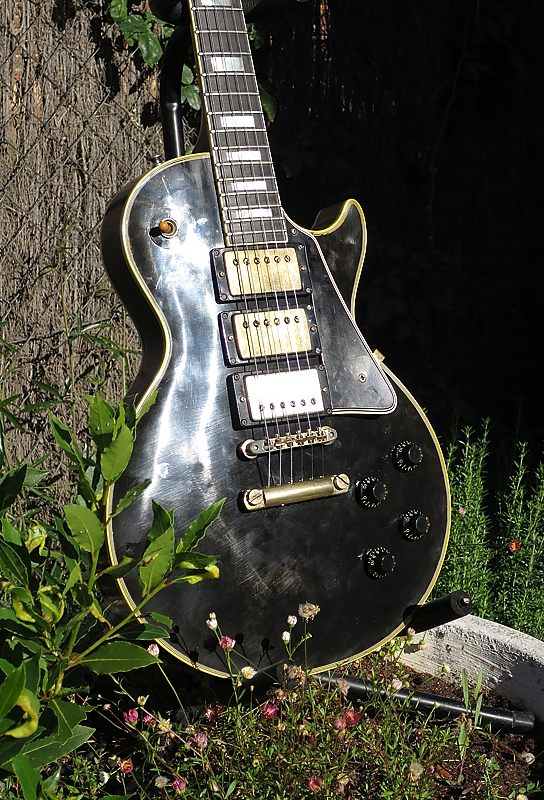
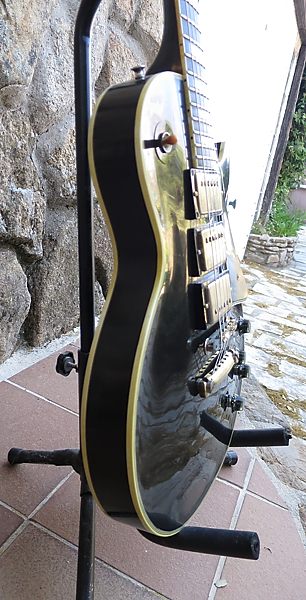
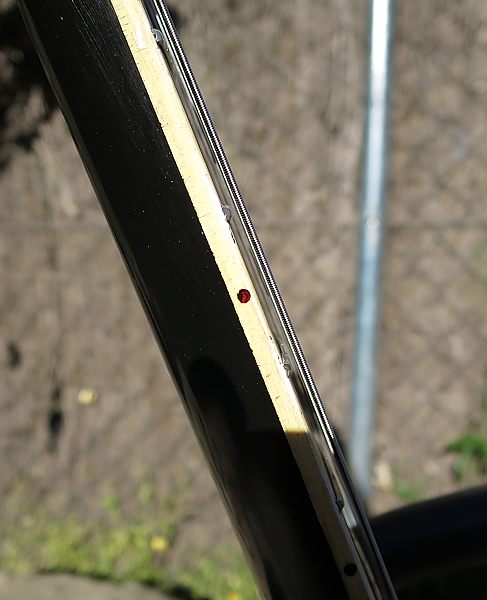
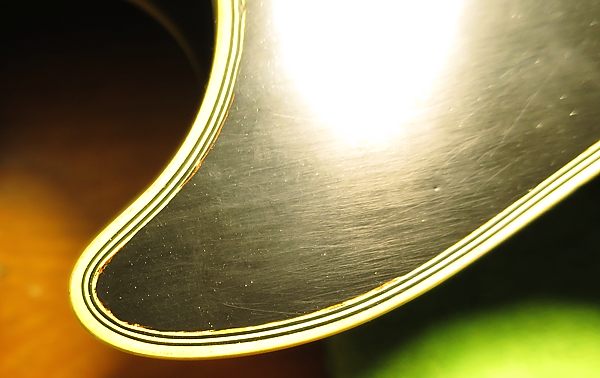
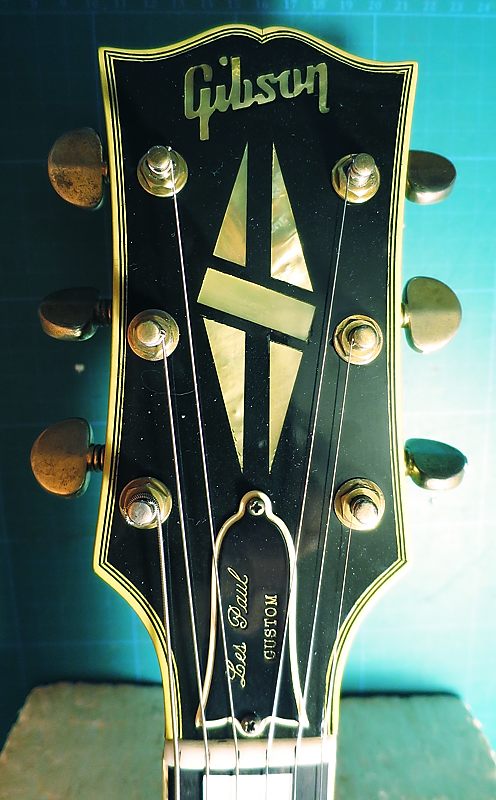
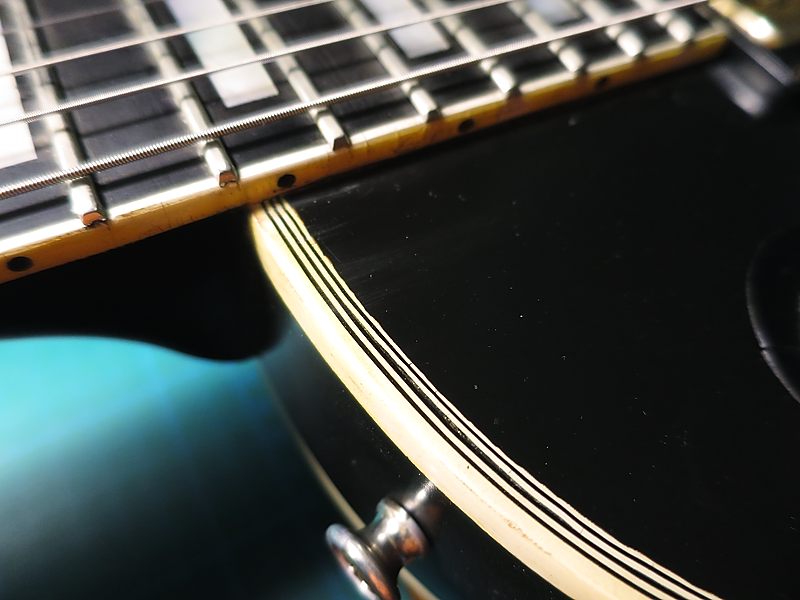
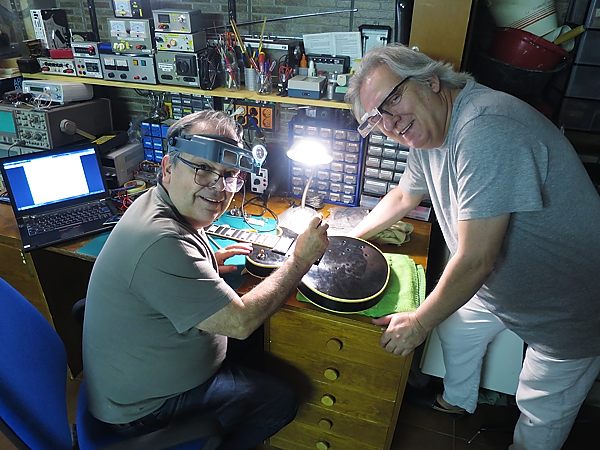
As you have seen, this is an extraordinary guitar with a lot of history behind, that had a first-class restoration done by a professional with a lot of experience. I did the rewiring work with great care at my "Factory Pisotones", advised by Enrique Garcia himself. The rest of the assembly was done by both of us.
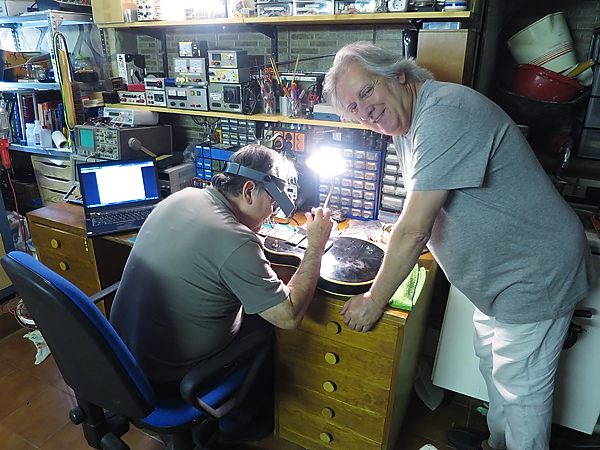
The resulting guitar is spectacular, with a very round and powerful sound. The "PAFs" are noticeable, along with the extraordinary quality of the guitar, especially the bridge pickup, which is incredible; It left several of us who tried it with our mouths literally wide open in awe. Up until now I've never heard a bridge humbucker that sounded so good, so powerful, so defined, so spectacular, with so much fullness... The neck pickup is super warm and defined, with a "air" which I'm afraid is very difficult to obtain with modern parts. The middle position, as I have already mentioned, is not to everyone's liking but, also as stated above, it is an easy fix.

Since we can't have them all, much less like this one, at least from time to time we can give ourselves the luxury of trying those of our friends!
Now you can see and hear no other than Jared James Nichols showcasing this very guitar back in 27/Sept/2023 in the guitar shop Organigrama in Málaga, Spain.

| Brand | Gibson | |
|---|---|---|
| Model | Les Paul Custom | |
| Color | Negro "Black Beauty" | |
| Year | 1959 | |
| Serial# | 9 2047 | |
| Scale | 24.625" | |
| Weight without HW | 2854g | |
| Total weight | 3928g |
| Body | Honduran mahogany. One single piece. | |
|---|---|---|
| Body width (total) | 60mm. | |
| Body width (border) | 50mm. | |
| Body finish | Nitrocellulose lacquer. | |
| Bridge | ABR-1. | |
| Pickguard | 5 layers WBWBW. |
| Neck | Honduran mahogany with "wings". | |
|---|---|---|
| Neck angle | 4,6 degrees. | |
| Fretboard radius | 10". | |
| Frets | Medium Jumbo (Jescar 45100). | |
| Neck thickness at 1st fret | 22,5mm. | |
| Neck thickness at 12th fret | 25mm. | |
| Neck width at nut | 42,5mm. | |
| Neck width at 12th fret | 55mm. | |
| Headstock thickness | 15,5mm. | |
| Headstock angle | 17 degrees. | |
| Neck finish | Nitrocellulose lacquer. | |
| Fretboard | Ebony. | |
| Neck to body joint | Set Neck | |
| Tuners | Grover "Pat. Pend. U.S.A." Rotomatic 102-G. |
| Pickups | Gibson PAF | |
|---|---|---|
| Neck pickup DC resistance | 7,9K | |
| Middle pickup DC resistance | 8,62K | |
| Bridge pickup DC resistance | 9,1K |
| Volume Potentiometers | 500K Log. | |
|---|---|---|
| Tone Potentiometers | 500K Log. | |
| Knobs | Top Hat. | |
| Tone capacitors | 20nF 50V disk ceramics. | |
| Switch | Switchcraft. Special for 3 pickup guitars. | |
| Jack | Switchcraft. |
To know more (in spanish): Gibson Les Paul custom 1959 de Enrique Garcia at the forum of guitarrista.com
